

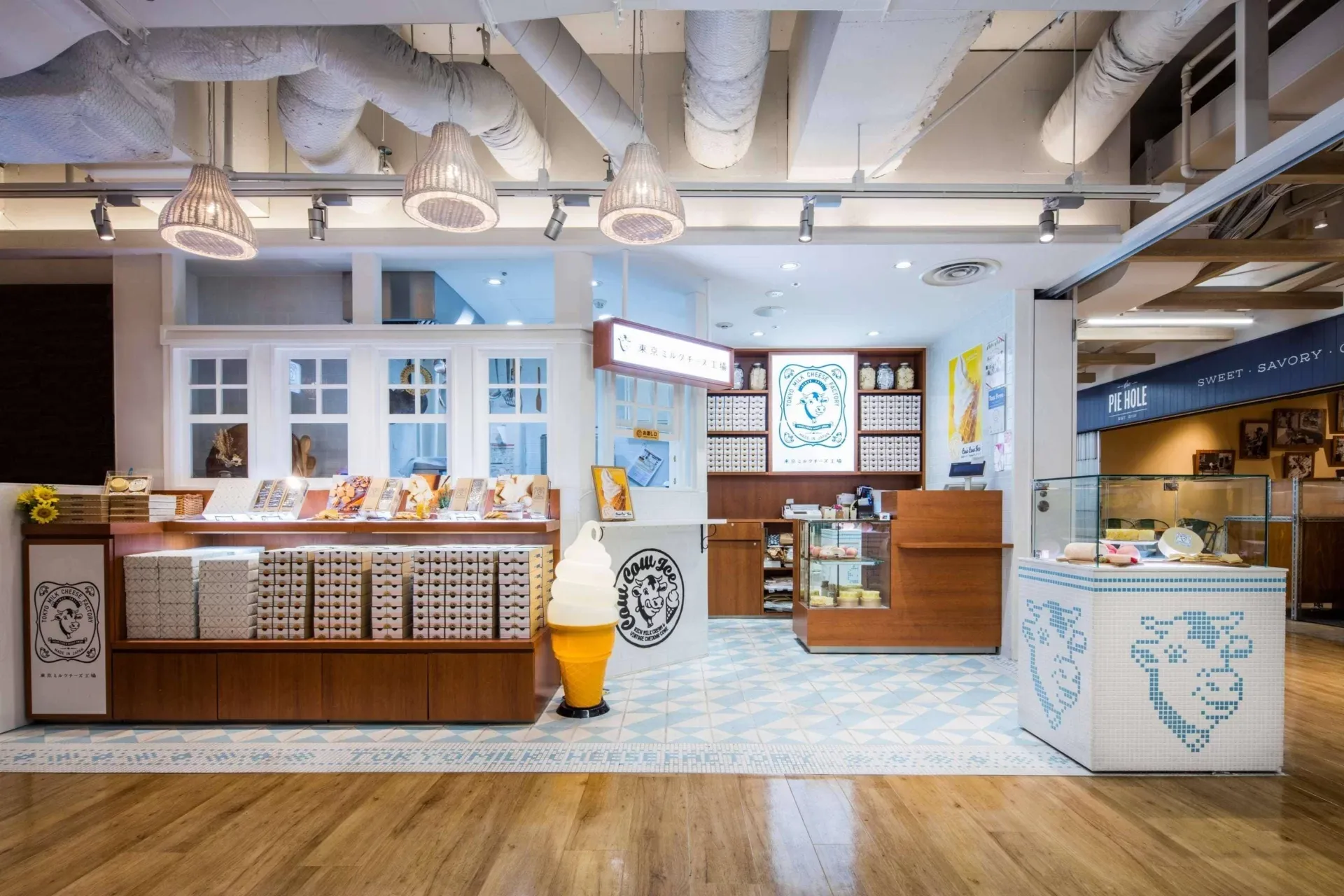
If you have traveled to Japan, the following names may already be familiar to you:
LeTAO’s cheesecake from Otaru, Hokkaido; Maple Mania cookies that draw long queues at Tokyo Station; and Tokyo Milk Cheese Factory, a brand that has become a social media sensation…
These highly recognizable brands may each be dressed in a distinct regional identity and built around a different narrative, but behind them stands the same operator: Kotobuki Spirits.
Founded in 1952 in Yonago, Tottori Prefecture, Kotobuki Spirits began in a small city far removed from Japan’s mainstream tourist routes—one that most Chinese travelers have never visited, and that even many Japanese locals may struggle to place on a map. From this unlikely origin, it has grown into a formidable souvenir empire: four of the Top 10 best-selling products at Tokyo Station now come from its portfolio, while dozens of its sub-brands occupy key transportation hubs across Japan. Even today, the company continues to launch two to three new brands each year.
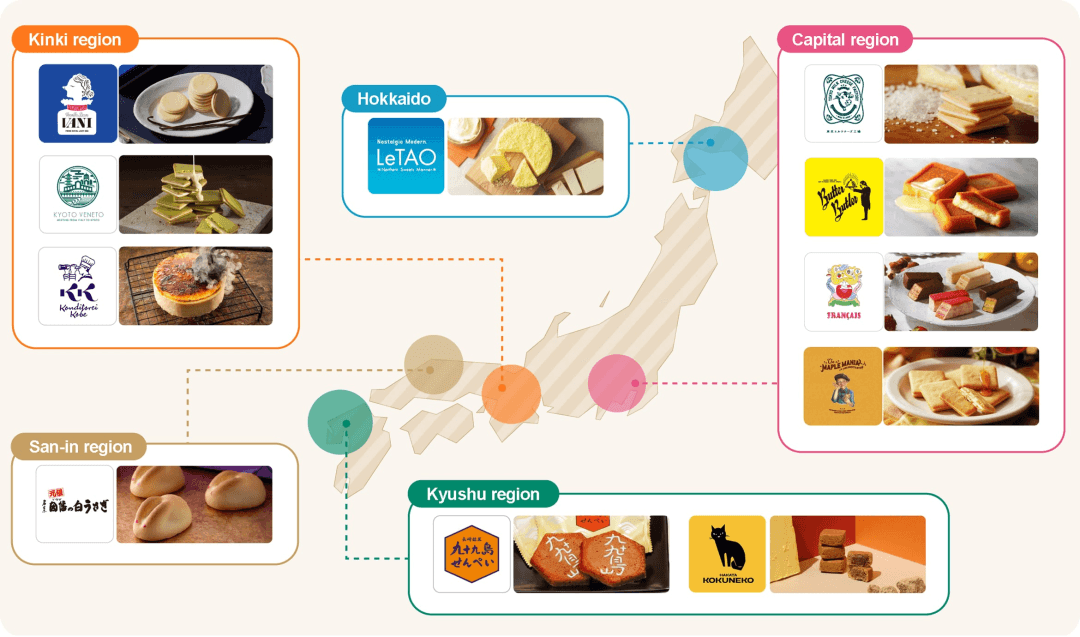
Kotobuki Spirits’ nationwide brand portfolio
Japan’s souvenir confectionery market is filled with formidable players. Ishiya is home to the nationally beloved Shiroi Koibito cookies; GRAPESTONE owns Tokyo Banana; and Shiga-based Taneya built La Collina, a destination that welcomes more than four million visitors annually. Yet when it comes to profitability at scale and operating efficiency, no company currently rivals Kotobuki Spirits.
According to its latest financial report, Kotobuki Spirits generated approximately RMB 3.4 billion in annual revenue, with a gross margin as high as 61.4%, a net margin of 15.9%, and an impressive ROE of 28.5%. It has long ranked among the top two companies in Japan’s food industry by net margin. For a food company, its cookies are priced three to seven times higher than comparable products sold in supermarkets and convenience stores—yet consumer enthusiasm remains undiminished.
This financial model is an outlier in the food industry, seamlessly combining the scalability of FMCG, the premium pricing power of luxury goods, and the high turnover of retail.
Why has Kotobuki Spirits been able to deliver such financial performance?
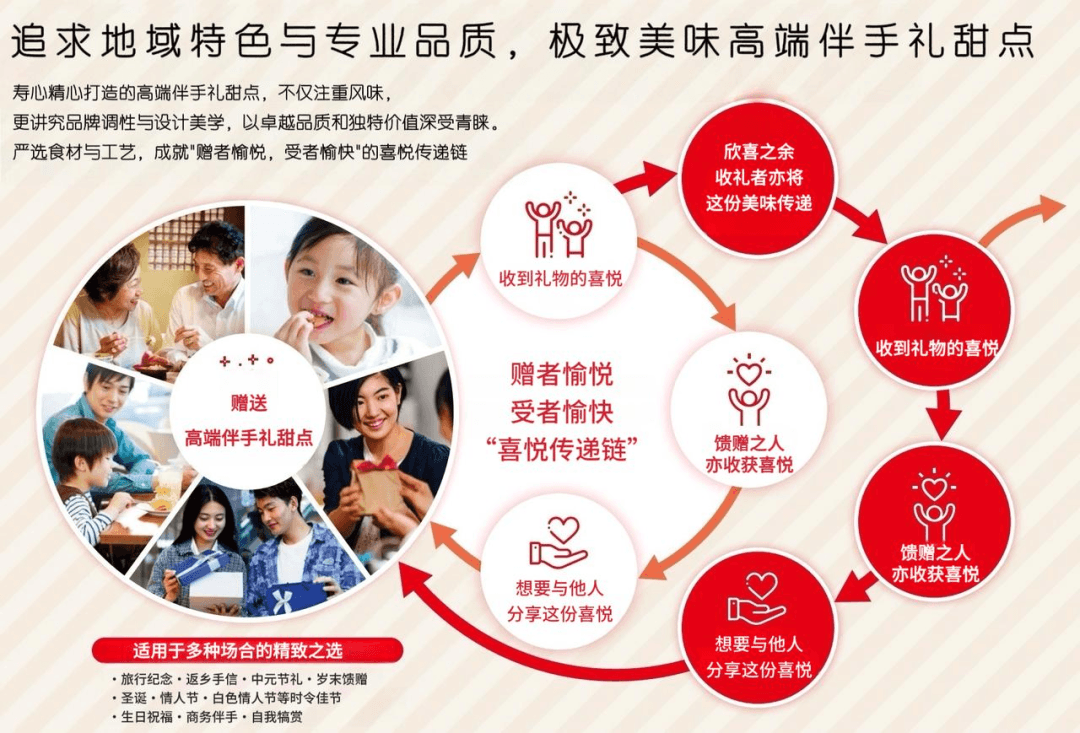
To answer this question, we must first understand that what Kotobuki Spirits sells is, in essence, an experience—one that consumers give to colleagues, friends, family members, or even themselves. At its core, Kotobuki Spirits is not merely a dessert company; it is a gifting company built around service and occasion, one that industrializes the “legitimate premium” embedded in gifts. Or, in the company’s own words, it is a company that “creates joy and delivers joy.”
In this article, we seek to answer two questions systematically: how did Kotobuki Spirits rise to prominence, and why has it been able to differentiate itself and achieve one of the highest profit margins in the industry?
Kotobuki Spirits’ rise unfolded alongside three waves in Japan’s souvenir-gifting market
In 1952, Kotobuki Spirits began as a factory in the remote prefecture of Tottori, primarily engaged in OEM production while also developing a small number of proprietary products.
From the 1960s to the 1970s, against the backdrop of the Olympics, the World Expo, and an infrastructure boom, Japan’s expressway and railway networks rapidly took shape, unleashing a surge in mass tourism. This gave rise to the first major wave in Japan’s souvenir-gifting market, and Kotobuki Spirits, like many Japanese confectionery manufacturers, benefited from this powerful tailwind.
Even then, Kotobuki Spirits had already demonstrated a commercial instinct that set it apart from peers. In 1968, in order to create the premium local specialty “Inaba no Shirousagi,” the company deliberately shortened its shelf life to just five days, overturning the souvenir industry’s conventional two-month shelf-life standard. The product soon became a signature gift from Tottori’s Inaba region, establishing the company’s reputation early on.
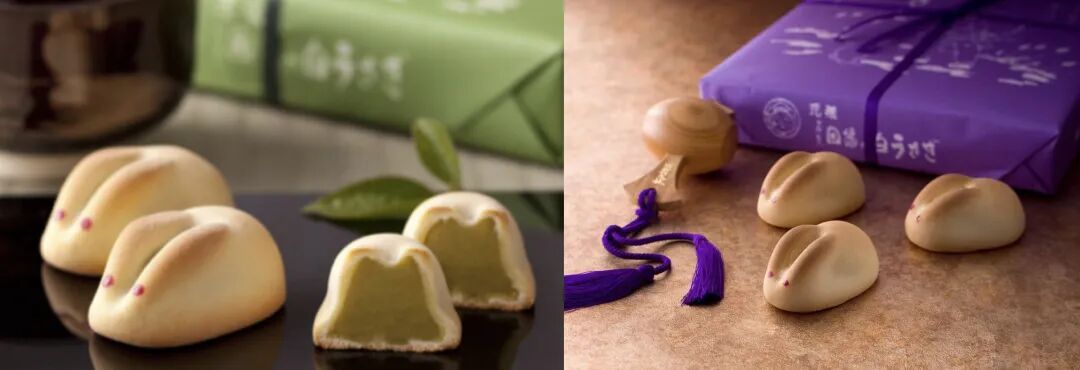
Kotobuki Spirits’ signature product, “Inaba no Shiro Usag”
However, Kotobuki Spirits’ true brand transformation took place in the 1990s. At that time, after experiencing the rise and collapse of the bubble economy, Japan’s commercial society entered a period of profound structural change across three dimensions:
1) Channel transformation. In 1987, JR (Japan National Railways) began privatization. Under pressure to manage profitability, railway companies started operating train stations as commercial real estate. Gradually, stations became an even larger and more unforgiving commercial battleground than department stores. The core sales arena for souvenir gifts was fundamentally reshaped.
2)The tailwind of regional revitalization. To counter the rural economic decline caused by the siphoning effect of major cities, local governments invested heavily in supporting the tertiary sector, enabling many regional specialties to undergo industrial upgrades. Riding the momentum of consumption upgrading and regional branding, local souvenir products began to acquire the quality foundation needed to reach national markets.
3)Gift-giving culture shifted from “major gifts for relationship maintenance” to “small gifts for emotional expression.” After the economic downturn, high-end social gifts costing tens of thousands of yen and used to sustain business interests began to fade. In their place emerged lighter gifts for friends, family, or self-reward. Consumers became more willing to pay for regional exclusivity, design sensibility, and narrative appeal.
These three shifts drove the second wave. At the time, Kotobuki Spirits’ president, Seigo Kawagoe, made a strategic decision: the company would transform from a simple confectionery manufacturer into a “brand operator” controlling the full value chain. This placed far higher demands on Kotobuki Spirits’ capabilities in channels, production, and brand building.
Kotobuki Spirits prioritized securing retail space in prime locations, such as major train stations, airports, and well-known tourist destinations. Store space in core transportation hubs is extremely limited, leases are long, and only one or two slots typically open each year. Railway companies select brands with the highest sales productivity per square meter. Kotobuki Spirits’ standard playbook was to first enter through pop-up stores, invest heavily to generate outstanding performance within the station, and use that track record to earn the right to a permanent location. Once the space was secured, the company would tailor an entirely new brand and product portfolio based on the characteristics of the location and its customer base.
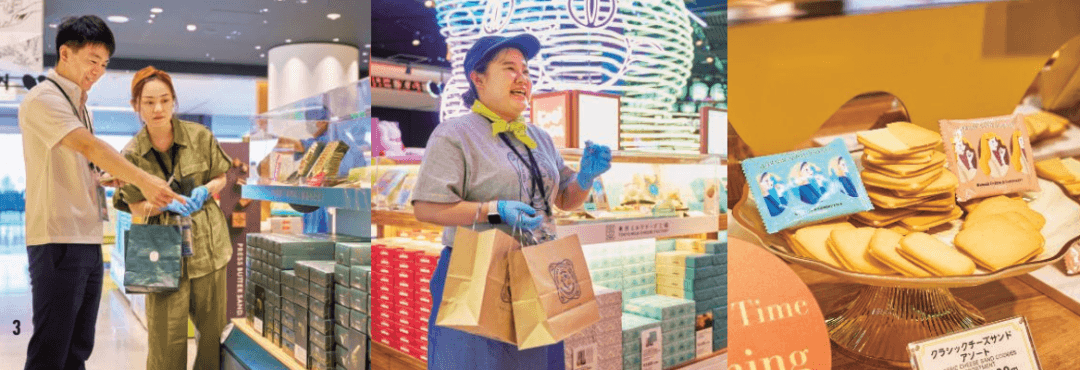
To gain greater leverage in this battle for prime locations, Kotobuki Spirits did something most corporate groups either cannot do—or would never allow: it let its subsidiaries compete against one another for the same retail space.
For example, Kotobuki Spirits would have its Hokkaido subsidiary KCC, which operates brands such as LeTAO, and its Tokyo subsidiary Sucrey, which operates Maple Mania and Tokyo Milk Cheese Factory, bid separately for the same location inside a transportation hub. The result was that the group could secure twice the floor area: if each company obtained 90 square meters, the group would control a combined 180 square meters.
At the same time, through highly astute acquisitions, Kotobuki Spirits absorbed and revitalized both physical assets and cultural assets across different regions of Japan.
The defining feature of Japan’s souvenir-gifting market is that it is highly fragmented and deeply traditional. For decades, these brands have been shaped by craftsmanship and long-established shop culture. Most companies remain highly conservative toward capital markets, rarely pursuing external equity financing or M&A-led expansion. As one of the few listed companies in this sector, Kotobuki Spirits could flexibly use capital-market leverage to acquire distressed century-old brands at the bottom of the cycle. In essence, it used modern capital to reshape a traditional industry.
Among these cases, the most representative is LeTAO, a brand founded in Otaru, Hokkaido.
When people think of Otaru, many immediately recall the film Love Letter. Released in 1995, this romantic film transformed Otaru from a declining coal port into a newly popular travel destination. The year after the film’s release, Kotobuki Spirits acquired a near-bankrupt chocolate factory near New Chitose Airport in Hokkaido, providing a critical operational foothold for its Hokkaido business.
Then, in 1998, Kotobuki Spirits launched its directly operated brand LeTAO in Otaru. Its signature “double fromage cheesecake” became a local hit after media coverage. By then, Otaru had already become a top tourist destination for both domestic and international visitors. Kotobuki Spirits did not need to educate the market from scratch; instead, it directly converted Otaru’s newly formed city halo into LeTAO’s brand premium. This established its core operating template: “product = regional calling card.”
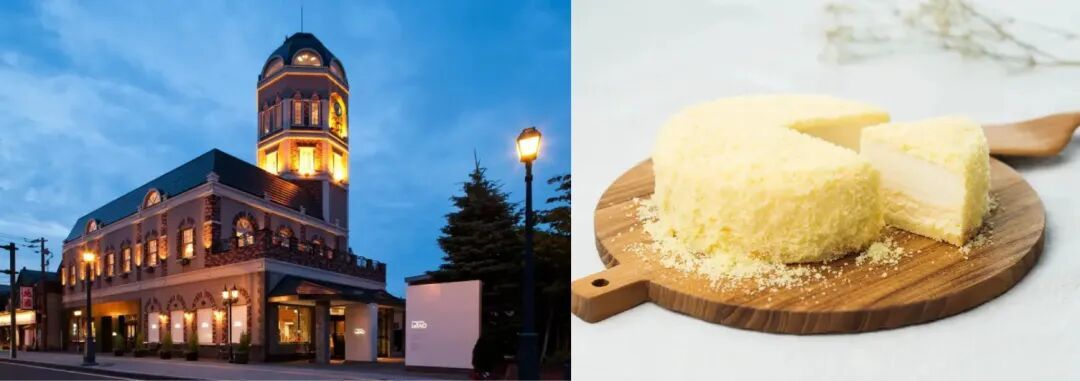
LeTAO store in Otaru and its signature product
In the same year, Kotobuki Spirits acquired the bankrupt century-old brand Tsukiji Chitose, once a supplier to the Imperial Household, for a symbolic 1 yen. This opened up a path for growth through M&A of long-established brands and laid the groundwork for its later entry into the Tokyo market.
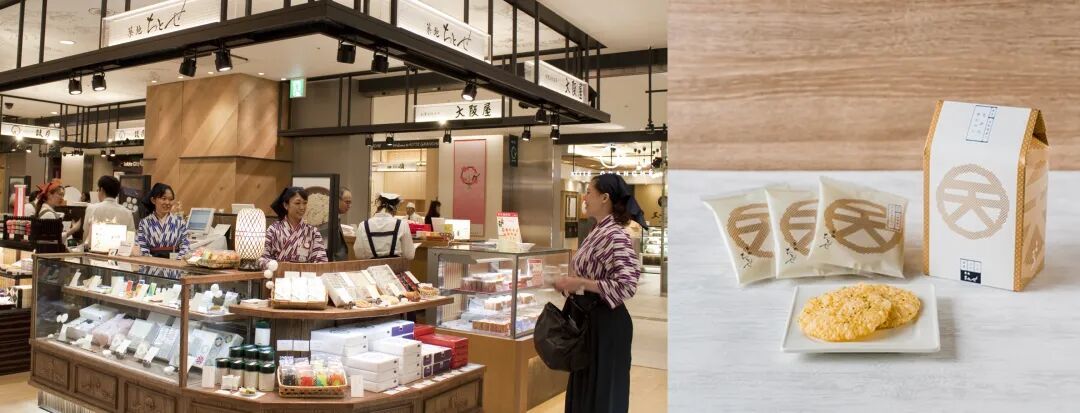
Tsukiji Chitose
Entering the 2010s, Japan’s relaxation of visa policies unleashed a wave of inbound tourism from Asian travelers, bringing the souvenir-gifting market into its third major cycle.
At this stage, Tokyo’s Haneda and Narita airports, through privatization and concession-based operating models, increased the share of non-aeronautical revenue such as duty-free retail and dining. As a result, they became some of the most powerful monetization engines for souvenir sales. Recognizing the shift, Kotobuki Spirits accelerated its capture of the Greater Tokyo market and executed industry consolidation with even greater efficiency.
In 2011, Kotobuki Spirits established its subsidiary Sucrey, which later incubated multiple star brands including Tokyo Milk Cheese Factory and Maple Mania, directly targeting the Tokyo metropolitan market.
In 2016, Kotobuki Spirits acquired the loss-making Francais from Meiji Holdings at virtually no cost, thereby absorbing its factory capacity in the Kanto region and its outstanding R&D team.
Through this combination of moves, Kotobuki Spirits systematically entered the core shelves of international terminals and Tokyo Station. This series of forward-looking deployments turned duty-free channels into a powerful growth engine. Today, inbound tourists contribute approximately 30% of the company’s revenue.
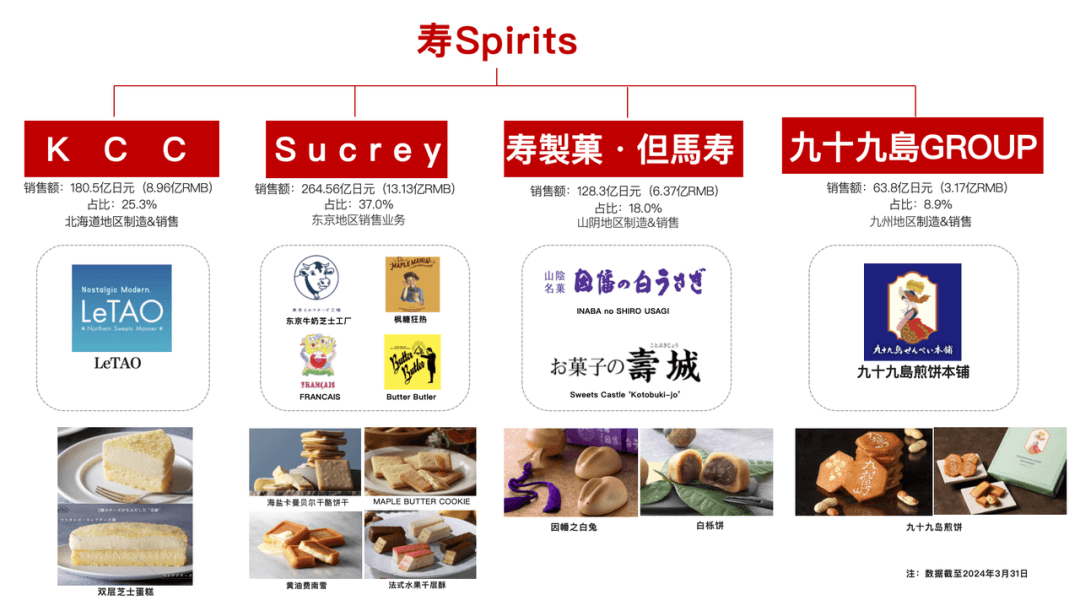
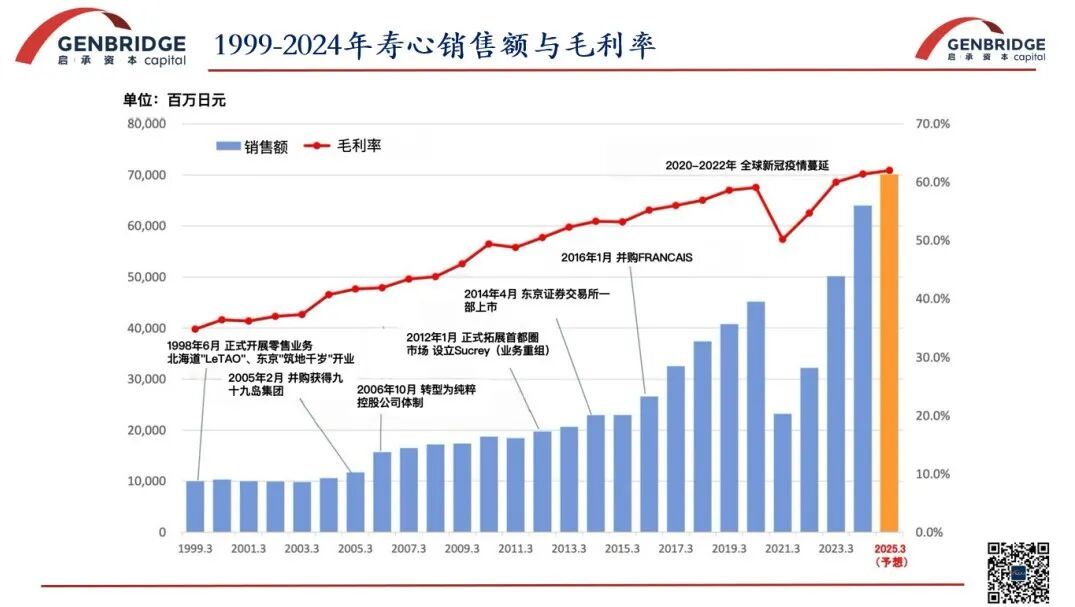
Kotobuki Spirits’ rise lies in its precise recognition of every major social shift since the 1990s. During each window of opportunity—from station commercialization and the upgrade of experiential consumption to the boom in inbound tourism—it positioned itself at the forefront of the era with decisive strategic vision and commercial conviction, ultimately building the souvenir-gifting empire it is today.
Compared with other dessert companies, where does Kotobuki Spirits’ high profitability come from?
As noted at the beginning, Kotobuki Spirits’ profit-generating capacity is remarkable. According to its latest FY2025 financial report, the company generated approximately RMB 3.4 billion in annual revenue, with a gross margin as high as 61.4%, a net margin of 15.9%, and an impressive ROE of 28.5%. Its net profit margin has long ranked among the top one to two companies in Japan’s food industry.
Against the backdrop of the post-bubble economy, most Japanese companies struggled through the past three decades. Yet Kotobuki Spirits’ revenue and gross margin have continued to grow steadily, with the exception of the COVID-19 period from 2020 to 2022, while its scale has continued to expand. During Japan’s “Lost 30 Years,” it has been a rare outlier.
1. The SPA model is the aircraft carrier, and the amoeba model is the fighter jet
If Kotobuki Spirits were a commercial fleet, the SPA model would be the aircraft carrier providing heavy firepower, while the amoeba model would be the agile fighter jet charging into battle.
SPA, or Specialty retailer of Private label Apparel, was originally a term from the apparel industry and gave rise to giants such as Uniqlo and Zara. Its core concept is vertical integration. Translated into the souvenir-gifting industry, it becomes manufacturing-led retail.
Japan has an exceptionally developed offline commercial network, and traditional players generally follow the classic chain of manufacturing, wholesale, and retail. Conventional confectionery factories are usually responsible only for producing the sweets, then packaging them and handing them over to powerful distributors, who ultimately place the products on public shelves in JR station retail complexes or airport duty-free stores. Although leading players such as Ishiya and GRAPESTONE have also opened directly operated flagship stores, they still rely heavily on large traditional wholesale networks for overall revenue.
By contrast, Kotobuki Spirits chose to build a multi-brand SPA matrix. This means it fully integrates the entire chain, from upstream product development and midstream factory manufacturing to downstream directly operated retail stores.
Under the SPA model, 50% of Kotobuki Spirits’ sales revenue comes from directly operated stores, while wholesale accounts for 40%. Even in wholesale, the company offers a maximum wholesale discount of only 15%, far below the industry norm of 20% to 50%. In other words, through the same channels, others must give up 30% to 50% of the price to get on the shelf, while Kotobuki Spirits only needs to concede 15%. This is essentially the result of the combination of SPA and strong brands.
This means Kotobuki Spirits does not have to leave its fate in the hands of distributors. Instead, it controls the final half-meter between product and consumer.
At the directly operated retail level, however, Kotobuki Spirits’ headquarters does not govern in a top-down, authoritarian manner. On the contrary, it delegates substantial authority. The company follows an amoeba-like “hyper-frontline management model,” under which frontline employees enjoy a high degree of autonomy. The basic principle is: senior management sets the broad direction, while frontline teams determine the specific tactics.
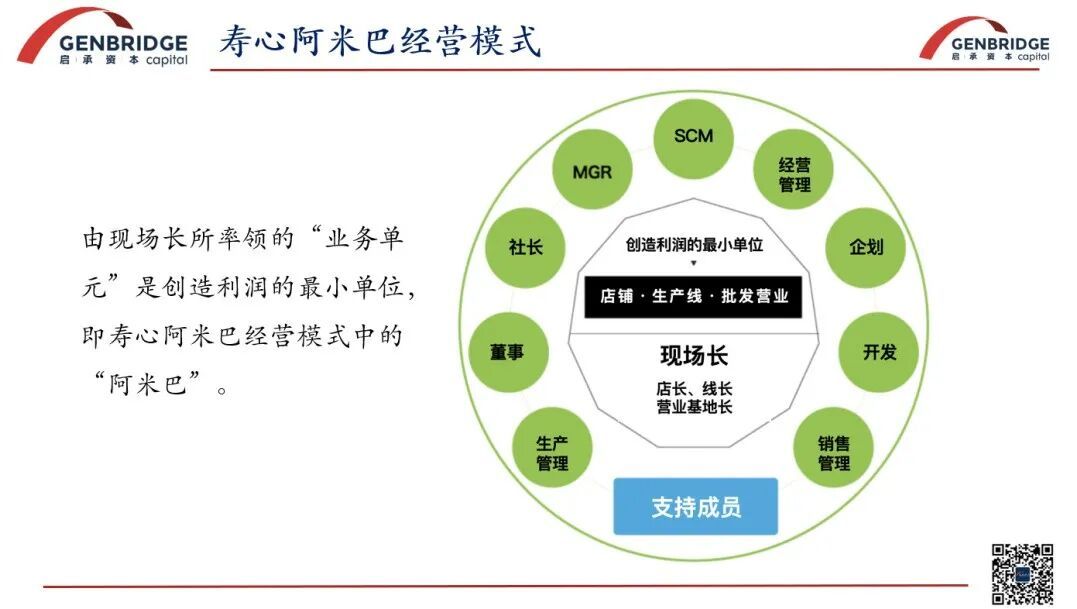
Kotobuki Spirits operates approximately 135 directly operated stores across Japan. For headquarters, these stores serve as the most sensitive market probes and the most agile fighter jets.
For example, after the 2010s, when senior management decided to “enter the Tokyo metropolitan area,” specific execution plans, such as how to secure store locations and how to increase sales, were entirely conceived and implemented by frontline teams. Headquarters’ role shifted to supporting the frontline, encouraging proactive proposals, and sharing responsibility with management once ideas were approved.
Under the amoeba model, frontline stores enjoy significant autonomy, and headquarters generally provides unconditional support for store-level strategies. For instance, if a store wants to remove a wall that obstructs product displays and affects sales, headquarters will find ways to negotiate with the landlord and fulfill the frontline team’s request as much as possible.
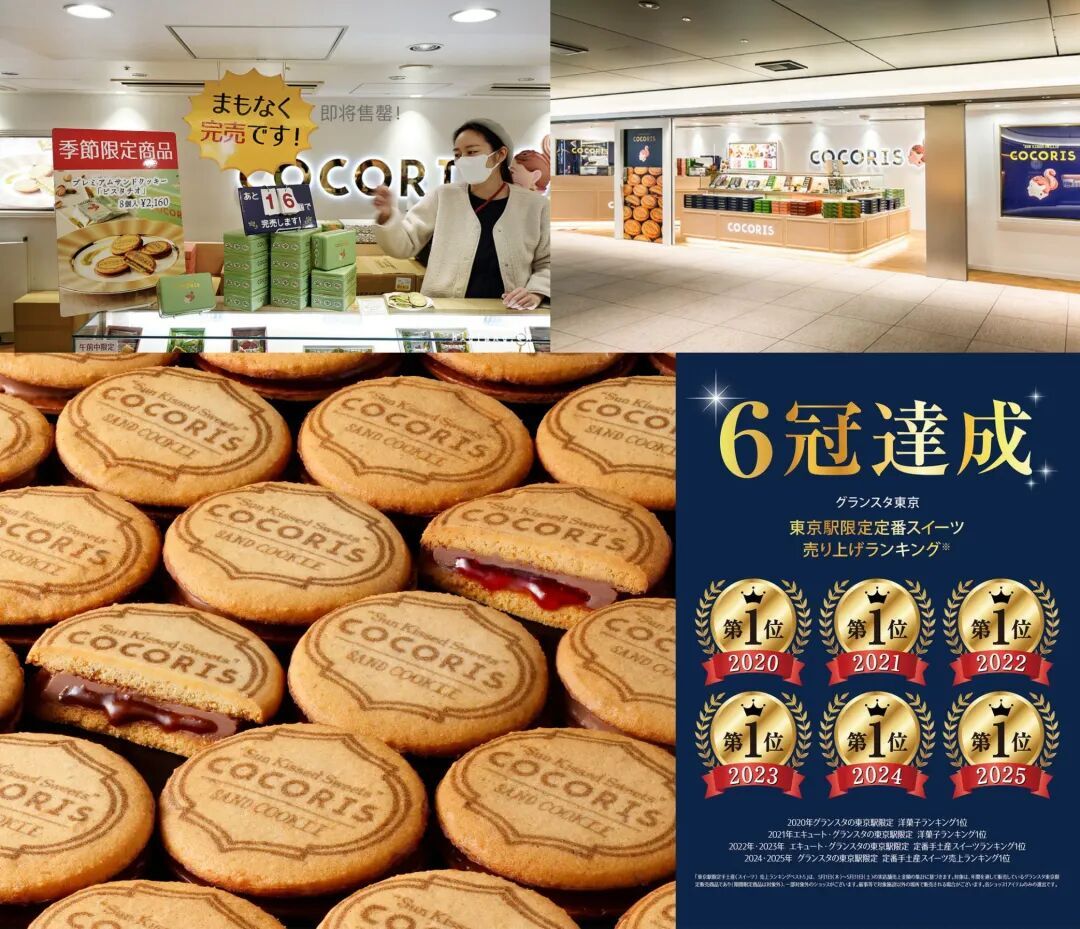
A frequently cited example is COCORIS. This was a new brand incubated in GranSta, the commercial zone inside Tokyo Station. In its early days, its sales were less than half those of the long-established competitor “Hagi no Tsuki” located across from it.
To increase sales, the frontline store team took a series of spontaneous actions: setting up tasting counters to increase customer engagement; using barriers to “create” queueing scenes; and even when inventory was available, putting up “waiting for restock” notices, then using “limited restock” messaging to create a sense of urgency and scarcity.
Thanks to the initiative and execution of the frontline team, COCORIS overtook competitors in just one year and became the top-selling brand in the commercial zone, with single-store, single-brand sales reaching approximately RMB 60 million, or more than 1 billion yen.
Store managers can not only determine product sales strategies, but even hold final decision-making authority over products, with the product planning department playing a supporting development role. Under the SPA model, because store managers are responsible for profitability, allowing them to judge from the frontline “what should be sold in this location, to this group of customers” becomes the most efficient decision-making structure.
2. Using standardized production to carry non-standardized emotions
With Kotobuki Spirits’ business model in mind, we can now examine where its high profitability comes from. The answer can be broken down into two questions: how does it reduce costs, and how does it sell at a higher price?
Japan’s confectionery industry has long been constrained by the worship of craftsmanship and high labor costs, resulting in thin margins. Kotobuki Spirits, by adopting the SPA model, has the opportunity to achieve full industrialization across product development, production, channel deployment, and marketing.
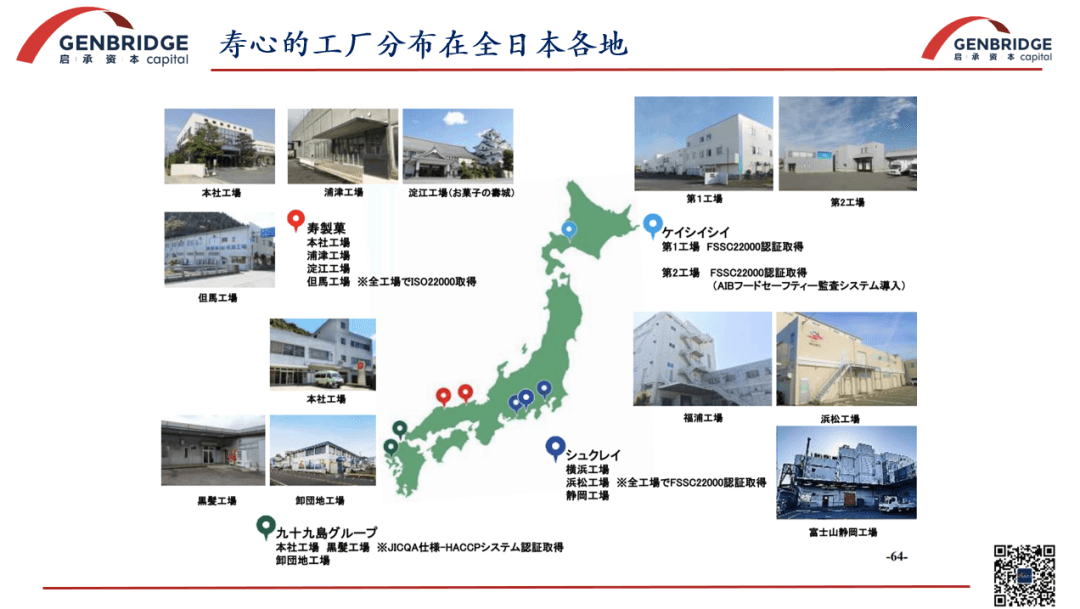
Kotobuki Spirits operates 11 factories across Japan. At the very beginning of product planning, the company uses machine-based mass production as a key screening criterion. To keep production lines running at full capacity, Kotobuki Spirits uses the same production lines across different brands whenever possible.
Take COCORIS sandwich cookies as an example. The cookie is filled with chocolate sauce, which would normally require extremely time-consuming manual piping. To improve efficiency, Kotobuki Spirits invested heavily in “One Shot” machinery, immediately maximizing production efficiency. Once the new process proved successful, the production line was quickly replicated across other brands in the portfolio to launch similar products.
At this point, you may wonder: if products are too similar and lack differentiation, would that not make it difficult to command premium prices?
Yet Kotobuki Spirits’ products are not cheap. In fact, they are three to seven times more expensive than comparable products. When placed alongside national brands in the same category sold in supermarkets and convenience stores, the price gap is immediately apparent:
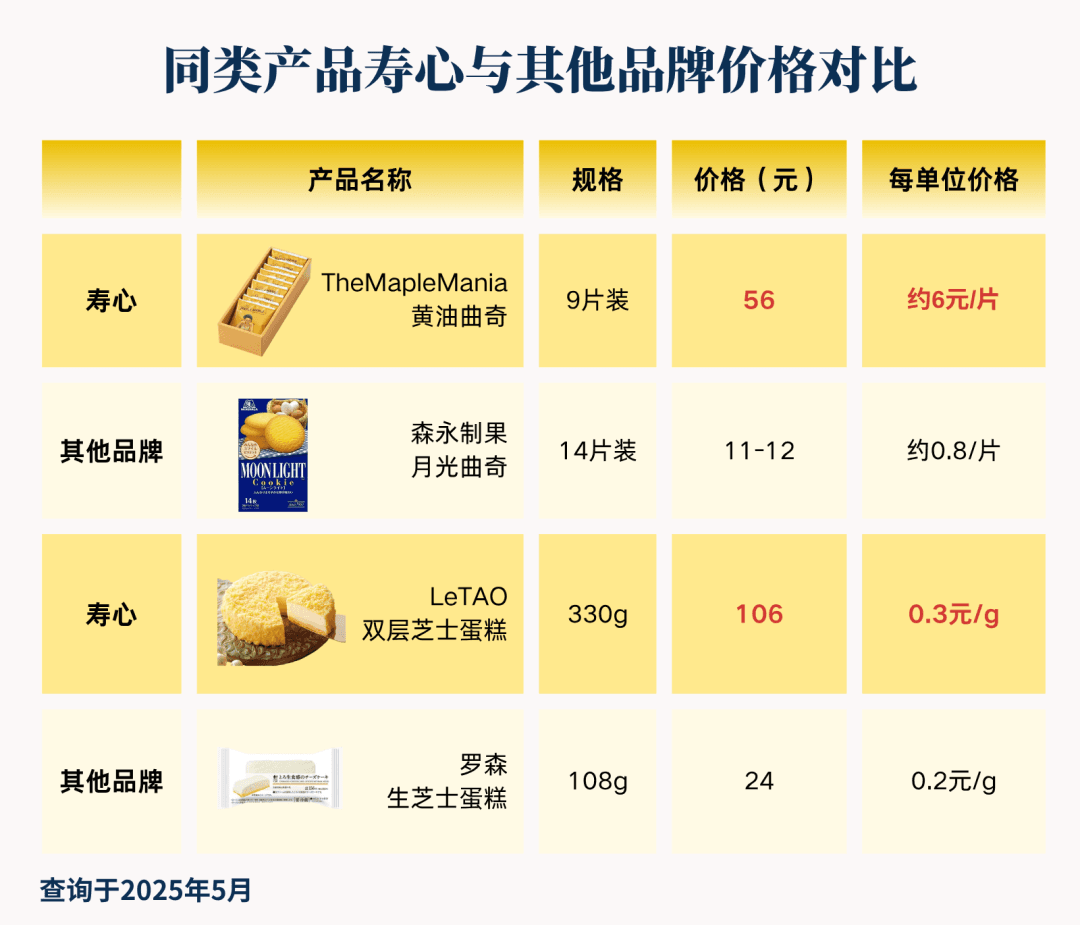
Why, despite such a large premium, are consumers still willing to pay for Kotobuki Spirits’ brands?
This brings us to another of Kotobuki Spirits’ key strengths: creating higher user value to support product premiums.
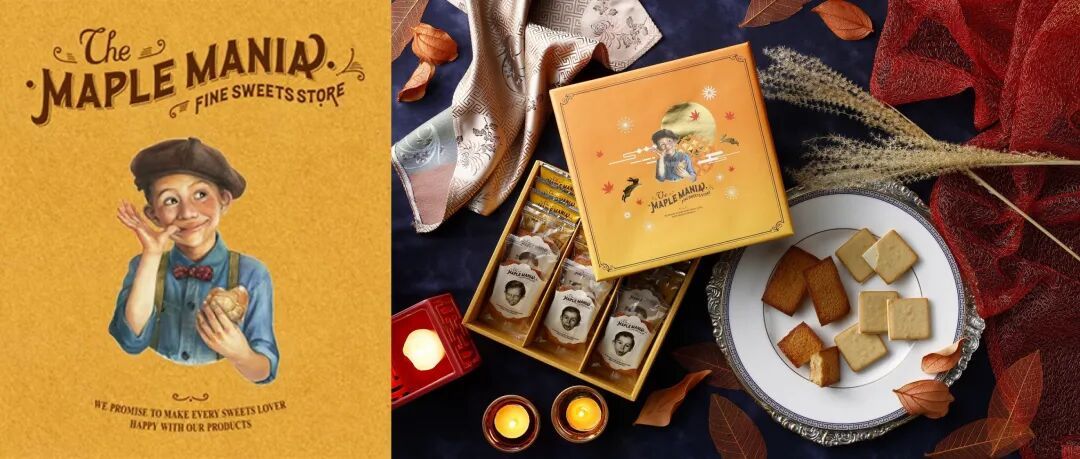
First, Kotobuki Spirits designs a unique story for each sub-brand. For example, The Maple Mania’s brand character is a lively and mischievous American boy who often keeps his favorite maple syrup hidden in his pocket, much like adults might keep a flask of whiskey in theirs. The Maple Mania hopes that its sweets will remind consumers of candies in glass jars at corner shops on the way home from school, the caramel aroma drifting from the kitchen at dusk, and the lingering sweetness on the tongue while secretly reading picture books under the covers.
Second, Kotobuki Spirits emphasizes the use of distinctive ingredients, highlights flavor characteristics, and combines ingredients to create new taste profiles. For instance, Tokyo Milk Cheese Factory pairs sea salt with Camembert cheese, and specifically states information such as “more than 73% Camembert cheese in the cheese filling,” highlighting both the substance and refinement of its ingredients.
Each year, Kotobuki Spirits also creates a large number of seasonal limited editions and collaborations. These not only inject freshness into the market, but also satisfy consumers’ desire for uniqueness and scarcity, strengthening the brand’s conversation value.
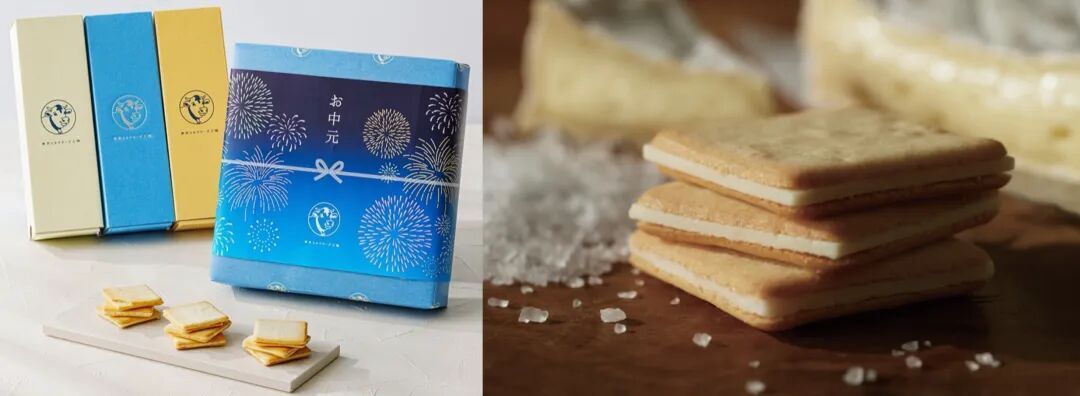
Tokyo Milk Cheese Factory summer limited-edition Chugen gift box; sea salt and Camembert cheese cookies
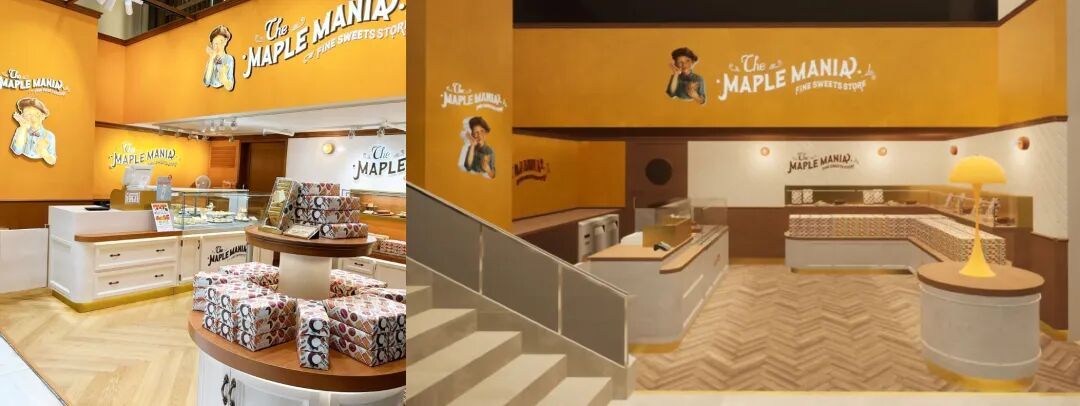
Without exception, these products feature refined visual systems. They not only enhance product appeal and gifting value, but also amplify the sense of surprise and ritual during unboxing, making them naturally suited for social media sharing. All visual design elements echo the brand story. For example, Maple Mania adopts a retro nostalgic packaging style, with warm-toned gift boxes. Its stores use bright orange colors and nostalgic elements, displaying a variety of maple sweets to create a playful, childlike consumption experience.
At the heart of these brand actions lies Kotobuki Spirits’ operating philosophy: “Create joy, deliver joy.” The company has never viewed itself as a food company, but as a gifting company. Its second-generation president, Seigo Kawagoe, once said: products have prices, but sentiment is priceless. The legitimacy of a high price comes from a good “encounter,” and a good “encounter” comes from good service and a good place. This is the starting point of Kotobuki Spirits’ entire premium-pricing logic.
What is a “good place”? For consumers, a good place is the travel destination. For Kotobuki Spirits, a good place is a high-traffic transportation hub that travelers are bound to pass through during their journey.
As noted earlier, Kotobuki Spirits’ product and product development mechanism is sales-driven. Frontline stores first secure the best geographic locations, such as transportation hubs in major cities, including Tokyo Station, international airports such as Haneda Airport, and well-known department stores. These locations inherently carry quality and premium associations, making them naturally suited for souvenir-gifting purchases.
After a location is secured, headquarters actively applies limited-edition strategies based on the characteristics of the sales site and its customer base, launching region-limited and time-limited products to create scarcity and urgency.
A “good place” is relatively easy to understand. “Good service” is the truly difficult part to replicate. Kotobuki Spirits anchors this capability in two pillars: amoeba-style frontline organization, and a culture-building system that almost resembles a religious structure.
To ensure frontline employees truly develop the awareness and initiative to fight this battle, Kotobuki Spirits did something few companies achieve: it turned corporate culture into a complete “community of philosophy.” It compiled Kozuchi, a management philosophy handbook consisting of six chapters and 120 articles, elaborating the company’s operating principles in detail, and holds daily reading sessions. One employee shares reflections based on personal experience and sets goals, followed by comments from two colleagues.
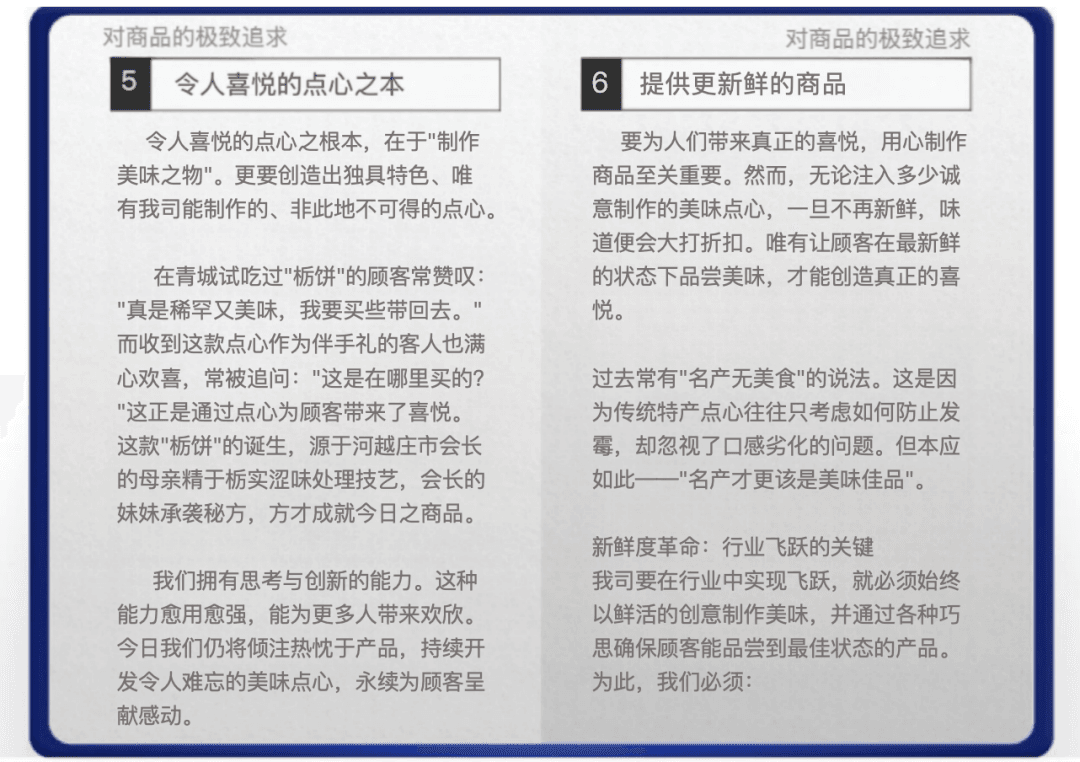
The management philosophy handbook Kozuchi
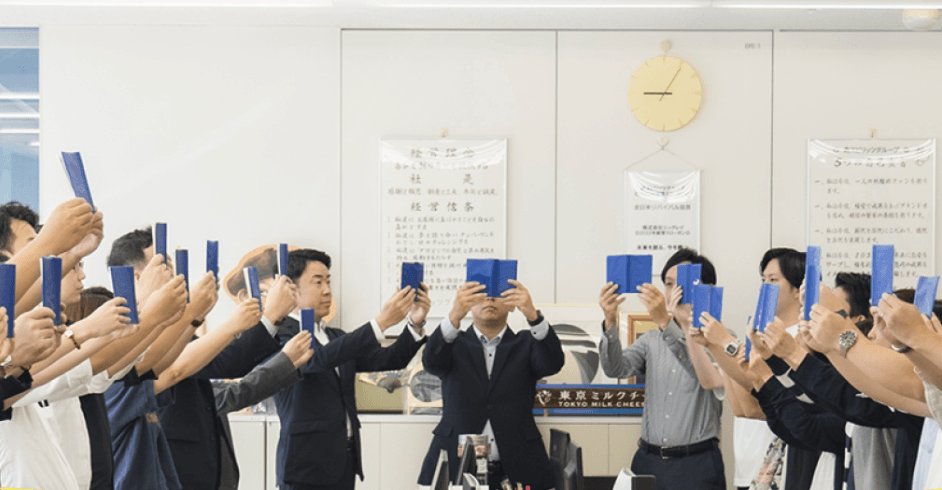
Kozuchi morning meeting
This culture does not remain at the level of abstract philosophy; it is directly embedded into KPIs. Kotobuki Spirits requires every store to submit one case each month that aligns with the company’s operating philosophy and creates user value. These cases are shared and reused internally, gradually forming a vast and inheritable case library of “moving customers.”
During my expert interviews, a long-serving employee responsible for e-commerce operations once shared a story with me:
A high school student in Fukuoka once wanted to give classmates small LeTAO gifts from Hokkaido on graduation day. Unfortunately, a typhoon disrupted logistics. To ensure the sentiment could be delivered on time, the employee bought a same-day plane ticket and personally flew from Hokkaido to Fukuoka to deliver the order. The customer was deeply moved and even called headquarters, saying, “For a company like this, I will buy its products for life.”
For Kotobuki Spirits employees, such actions are taken for granted. In the short term, the cost may indeed seem wasteful. But in the long term, if this customer continues buying Kotobuki Spirits products over the next ten years, that cost can be easily recovered.
Looking at cost reduction and price elevation together, Kotobuki Spirits uses industrialization and vertical integration to squeeze out inefficiencies from the cost side layer by layer. At the same time, it supports the price side through its positioning around “non-everyday occasions,” its relentless defense of prime locations, and the ability of frontline employees to “move customers.”
Externally, Kotobuki Spirits delivers regional flavors and emotional value rich with human warmth. Internally, it operates as a food-industrial mother machine, tightly wrapped in a multi-brand architecture. This model—using highly standardized products to carry non-standardized emotions—is precisely the foundation of its profitability far above peers.
Epilogue
If the story of Kotobuki Spirits were distilled into one sentence, it would be this: it is not truly a dessert company, but a company built around service and occasion, one that industrializes the “legitimate premium” of gifting.
On the cost side, it relies on industrialized production lines and shared SKUs across multiple brands. On the premium side, it shifts consumption from the “everyday” to the “non-everyday,” while fiercely defending prime retail positions in high-traffic transportation hubs, enabling the same category to command three to seven times the pricing power. Holding the entire system together is a distinctive frontline organizational culture.
Over 70 years, this company has proven one thing: in a “regional specialty dessert” category that appears to have no barriers, the real moat lies in turning the act of “moving customers” into a replicable industrial capability.
Looking back at China today, the country is still in the early stage of its souvenir-gifting economy: Sam’s Club’s egg yolk pastries, Bao’s Bakery’s New Year gift boxes, Xueji’s nuts… more consumers are becoming willing to pay for the feeling of being “remembered” and “moved.” The subject of gifting is shifting from families and enterprises to emotional expression between individuals, yet the supply side capable of carrying such emotional expression remains largely vacant.
Who will become China’s Kotobuki Spirits? Will it be a long-established brand born in a scenic destination, an emerging brand rooted in design, or a company emerging from a city being newly redefined? The answer may not appear immediately. But Kotobuki Spirits has already handed us the shape of the question: making a small gift is harder—and more valuable—than making a big product.
References
Seigo Kawagoe. The strongest philosophy-driven management through full participation. PHP Institute, 2013.
Seigo Kawagoe. The extraordinary management of Kotobuki Spirits. Management-sha, 2023.
GenBridge Capital internal research. Kotobuki Spirits: From regional specialty to emotional economy.
Expert interview with former head of e-commerce at Kotobuki Spirits, June 17, 2025.