

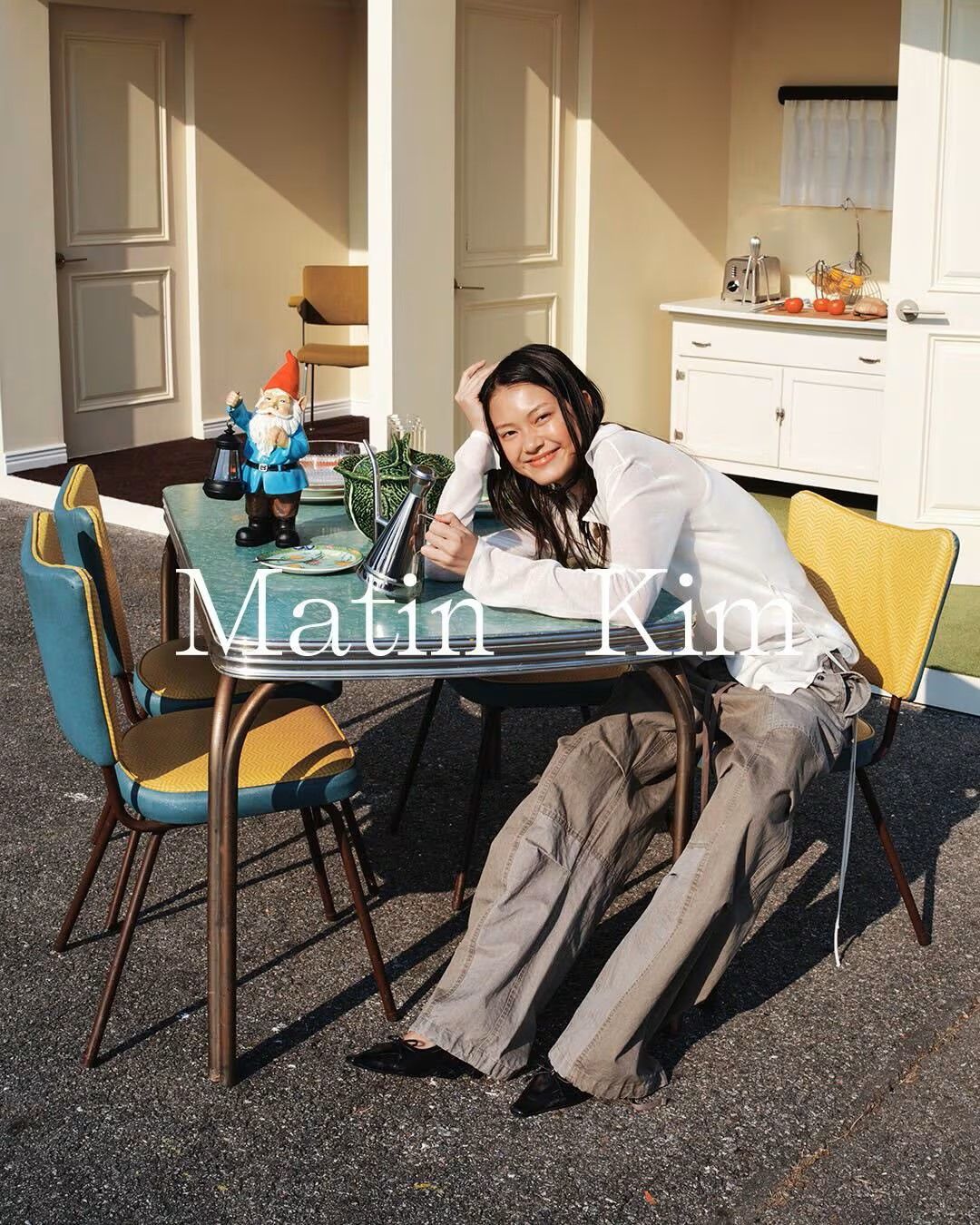
Now, imagine you are a designer aspiring to build your own fashion brand. You will need to find manufacturers, meet minimum order quantities, secure production slots, finance inventory upfront, clear excess stock, enter department stores, and open overseas stores. Even under an optimistic scenario, 99% of brands will stall somewhere along the way. Only a fortunate few will make it to becoming a global brand.
But what if there were an entire industry ecosystem that could help brands grow at every step?
That is exactly what Korean fashion, or K-Fashion, has built.
Since the 2020s, K-Fashion has made a major impact on the global stage. Many of these emerging brands have taken just three to five years to grow from small operations generating tens of millions of Korean won into businesses with annual revenues of KRW 100 billion or more, equivalent to over RMB 500 million, while rapidly expanding across Japan, China, and Southeast Asia.
Over the past two years, these brands have opened stores across major Chinese cities. In prime retail districts such as Sanlitun in Beijing, K-Fashion brands have become increasingly prominent.
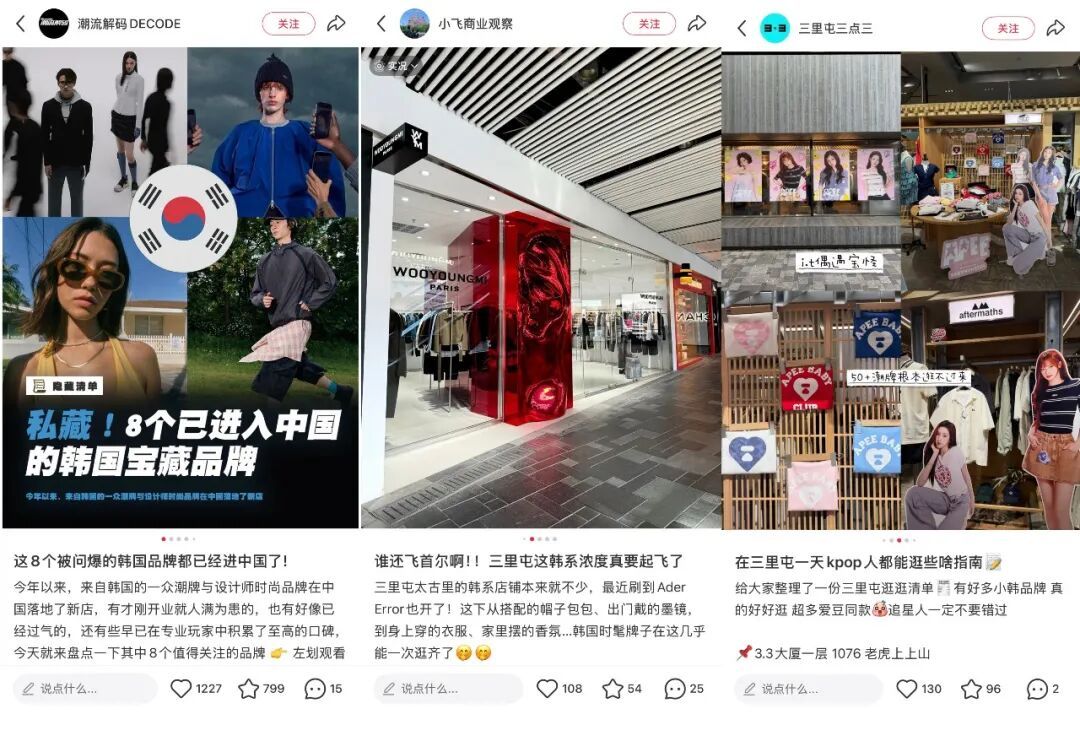
Last year, Korean fashion platform MUSINSA also entered into a strategic partnership with Anta Group to establish a joint venture, MUSINSA China, with plans to open 100 stores within five years. Kim Dae-hyun, CEO of MUSINSA China, said that China is central to MUSINSA’s global expansion story.
The rise of K-Fashion is by no means driven solely by individual “designer genius” or K-Pop celebrity influence. Supporting these brands on their journey to global markets is an industry ecosystem jointly built by e-commerce platforms, industry capital, supply chain companies, and retailers.
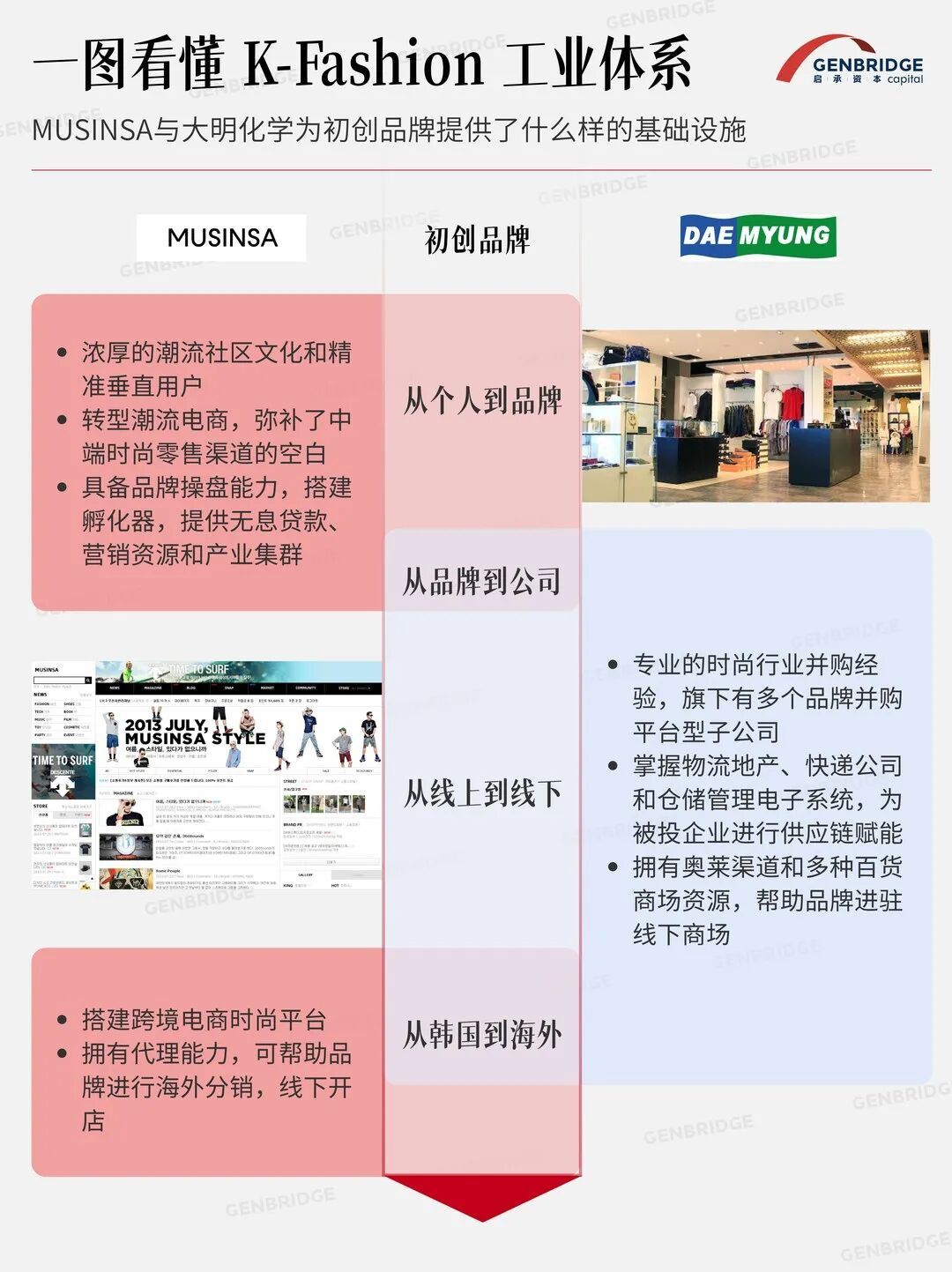
MUSINSA and Daemyung Chemical are two representative players in this ecosystem, providing different forms of support both on the front end and behind the scenes:
- The digital ecosystem at the front end — MUSINSA. It brings young consumers together through street photography and fashion communities, then helps emerging brands turn attention into orders through e-commerce, marketing, and interest-free production loans.
- The acquisition group behind the scenes — Daemyung Chemical. It has built an integrated portfolio spanning apparel manufacturing, outlet retail, and delivery logistics, while investing in emerging brands through teams such as Hago to help them build organizations and expand their channels
From 0 to 1, platforms help brands find their first customers. From 1 to 10, industry capital takes the baton, bringing in funding, management teams, and distribution channels. From 10 to 100, acquisitions open up new avenues for expansion, while platforms can take the baton again and bring brands into international markets.
In this article, we explore the stories of Korean designer brand Matin Kim, fashion e-commerce platform MUSINSA, and fashion industry giant Daemyung Chemical, to understand how brands, platforms, and industry capital can pass the baton from one to another, transforming what began as a one-person business into a global brand.
Contents
01 The beginning: When a fashion enthusiast decides to start selling clothes
02 The launch: What does a small-business-friendly platform mean?
03 The growth: How does a personal brand become a modern business?
04 The expansion: How does an online brand establish a strong offline presence?
05 The Epilogue: How many more Matin Kims?
The beginning: When a fashion enthusiast decides to start selling clothes
In 2015, Dongdaemun, once a go-to destination for women's fashion shopping in Korea, began showing signs of decline. Its narrow passageways were no longer packed with shoppers, while vacancy rates in shopping malls quietly climbed. Meanwhile, the fashion division of Samsung C&T, one of Korea's largest apparel companies, recorded its first-ever operating loss, triggering years of store closures and brand restructuring.
Just one year earlier, South Korea's gross national income per capita had crossed the US$30,000 mark. Gen Z and Millennials were stepping into the consumer spotlight. For younger consumers, what they wore was increasingly a way to express themselves and shape how others perceived them.
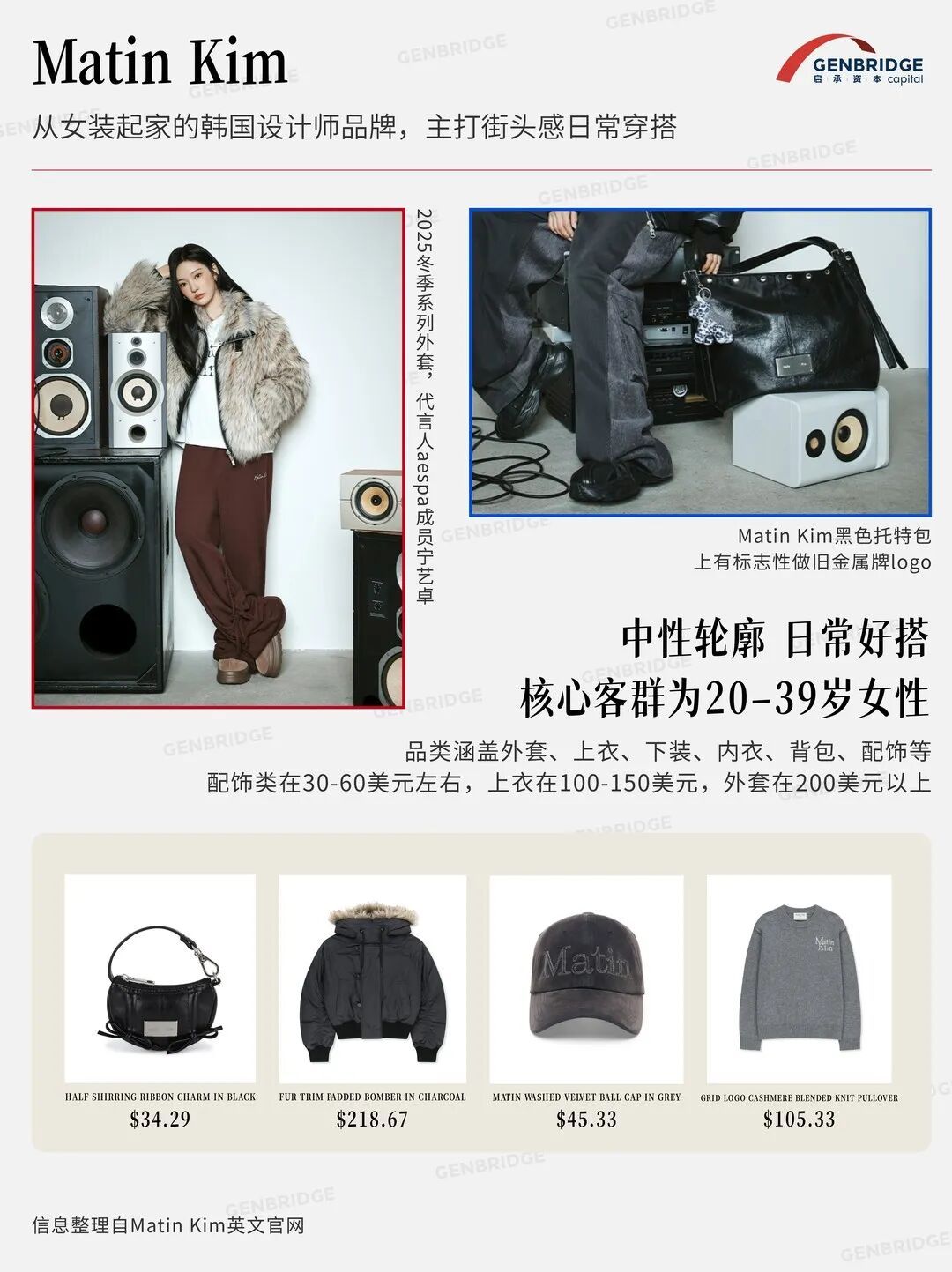
That winter, 23-year-old Kim Da-in began sourcing clothing from Dongdaemun and selling it through her Naver blog. Although she had only completed high school, she had a passion for fashion styling and had already built a following on Instagram. Encouraged by her followers, she later began experimenting with her own designs and named her brand Matin Kim.
Unlike many brands with avant-garde styles and high price points, Matin Kim sought to bring a subtle edge to everyday fashion at more accessible prices, making fashion approachable for ordinary consumers. This positioning helped her build a loyal customer base.
Matin Kim's entrepreneurial journey was a reflection of its time. A wave of KOLs were leveraging the rise of social media to launch their own brands. They shared everyday outfits on Instagram, posted vlogs, and engaged frequently with followers, building strong emotional connections with their audiences.
In 2020, the pandemic dealt a severe blow to offline retail. Sales of casual women's apparel at Korea's three major department store groups fell by nearly one-third year over year. As screen time surged and consumer spending shifted online, social media-driven brands gained further momentum in monetizing their online following.
Consumer preferences were also undergoing a dramatic shift. Instead of formal workwear, people gravitated toward "one-mile outfits"—comfortable enough for working from home yet presentable enough for stepping out at any time. This played directly into Matin Kim's positioning: casual, practical fashion with subtle design details.
By the end of 2020, Kim Da-in's Instagram account had nearly 100,000 followers. Whenever new products were launched, customers flooded the brand's online store, sometimes causing the website to crash. Its Hollywood Bag sold 1,500 units in its very first release.
Matin Kim was among a first wave of influencer-led brands that rode Instagram's growth to achieve a breakthrough. O!Oi, founded by renowned fashion influencer Jeong Ye-seul, made its signature American vintage sweatshirts a staple in young consumers' wardrobes. Meanwhile, Mardi Mercredi was inundated with orders thanks to its signature French daisy T-shirt.
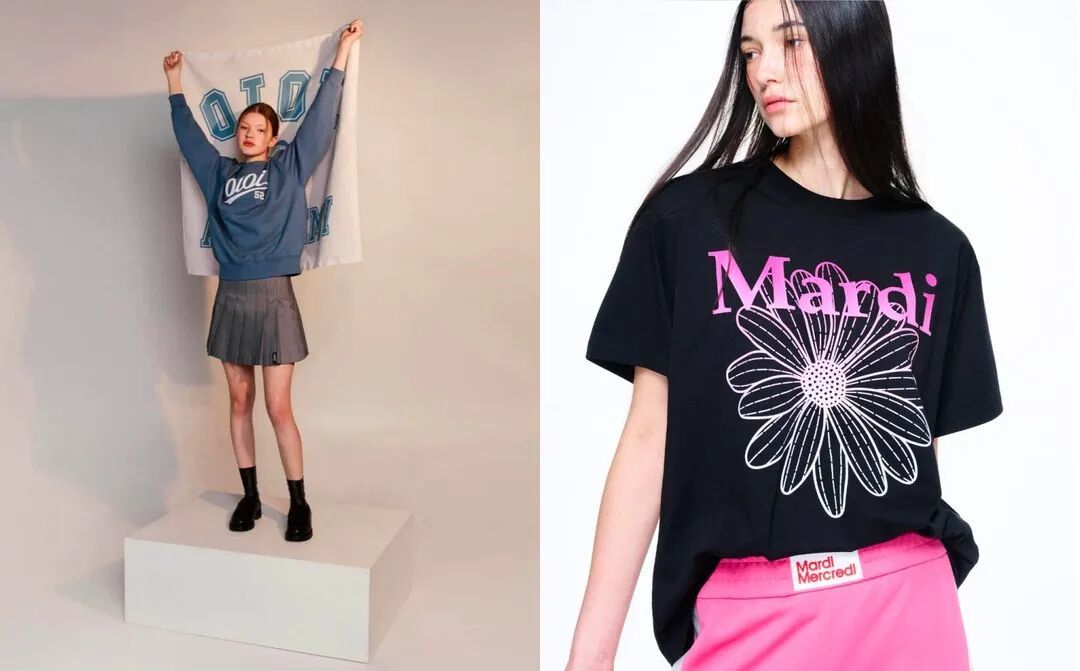
O!Oi's American vintage sweatshirts and Mardi Mercredi's French daisy T-shirts
By this point, their makeshift business infrastructure was no longer equipped to handle growing mainstream demand. They urgently needed a platform with more robust systems, greater traffic, and a deeper understanding of young consumers to help them evolve from influencer-run ventures into fully fledged businesses.
That platform was MUSINSA.
The launch: What does a small-business-friendly platform mean?
In August 2020, Matin Kim made its first move beyond its own online store, joining an online multi-brand fashion platform. Its choice was Wusinsa, MUSINSA's dedicated women's fashion platform.
Who is MUSINSA? Today, it is South Korea's largest and highest-valued fashion unicorn, and the country's first fashion platform to surpass KRW 1 trillion in annual revenue. By 2025, it had achieved three consecutive years of double-digit revenue growth, with more than 10 million monthly active users across its services. Its influence has also extended to international cities such as Tokyo and Shanghai, making it a key force behind the global expansion of K-Fashion.
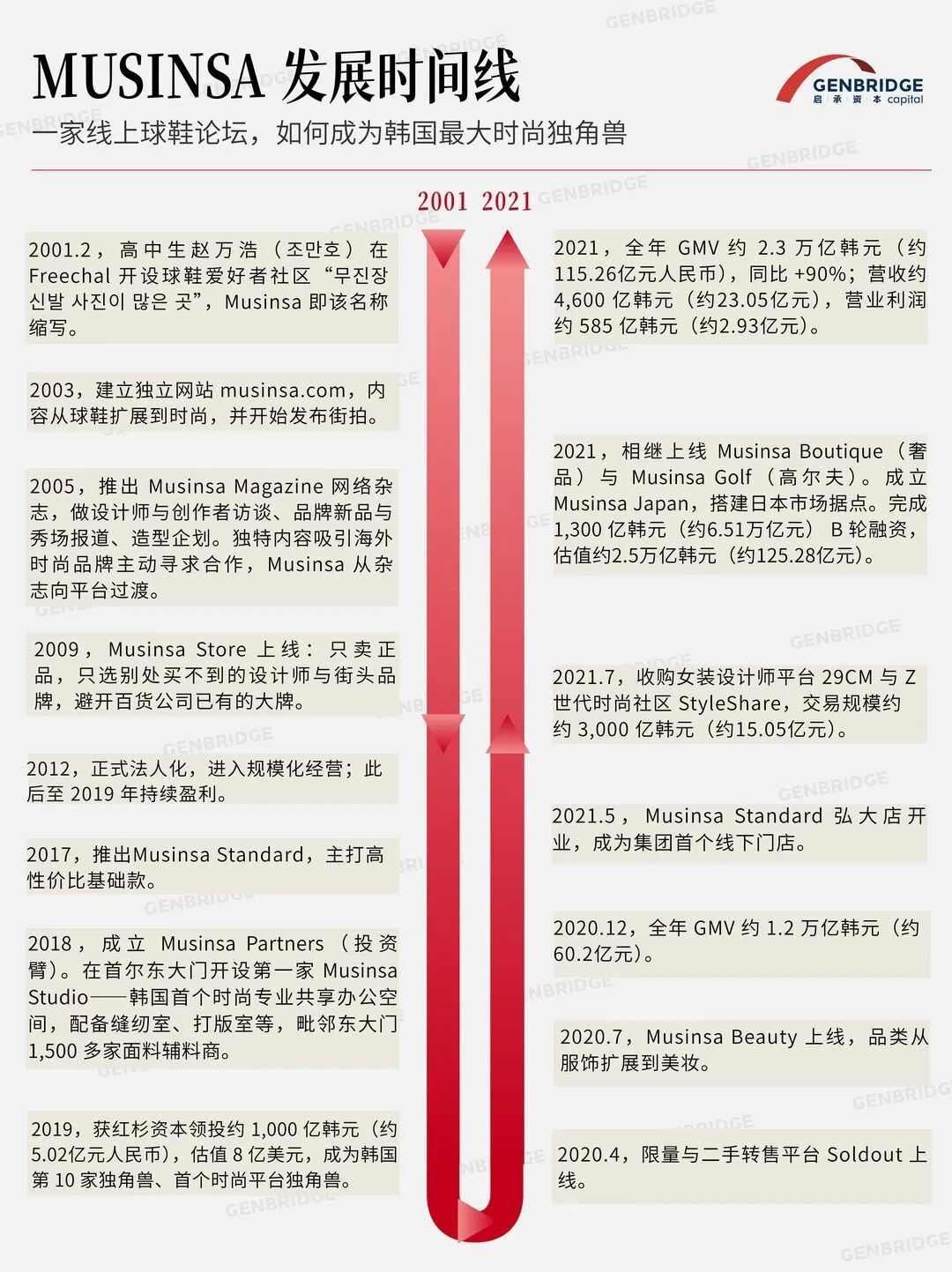
Going back to 2020, when Matin Kim joined the platform, MUSINSA was just entering a period of rapid growth. The previous year, it had secured an investment of KRW 100 billion from Sequoia Capital. By the end of 2020, more than 5,700 brands had joined the platform.
Why were so many emerging brands eager to join MUSINSA?
First, MUSINSA had a strong streetwear community culture and a highly targeted user base.
MUSINSA originated as an online community for sneaker enthusiasts before evolving into a broader fashion forum. Its founder, Cho Man-ho, was passionate about fashion and photography. In 2005, he launched the online publication MUSINSA Magazine, encouraging ordinary people to participate in street-style photography and directly helping popularize street fashion culture across Korea.
Fashion content helped MUSINSA sustain user engagement. According to a 2019 OpenSurvey study, 65% of surveyed users visited the platform to keep up with the latest fashion trends, while 48% visited out of habit. In addition, MUSINSA's 2025 Trend Report recorded nearly 8.96 million newly uploaded customer review photos during the reporting period. By combining fashion content with authentic consumer feedback, MUSINSA gradually evolved into a community where users could discover fashion trends, explore products, and share their personal styles.
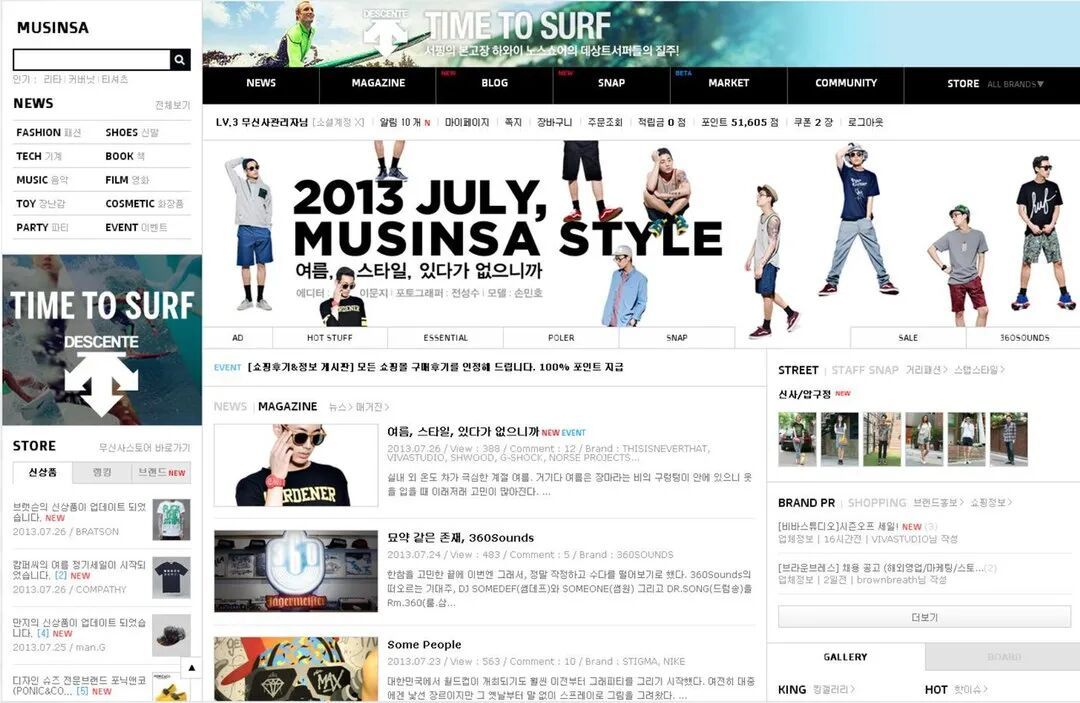
MUSINSA website homepage in 2013
Second, MUSINSA offered brands a lower-cost route to market.
In 2009, MUSINSA launched MUSINSA Store, officially entering e-commerce. For designer brands, it filled a gap in the mid-market fashion retail landscape. Traditional department stores such as Lotte and Shinsegae charged commissions as high as 35–40%. More importantly, small brands had to bear their own store fit-out costs and staffing expenses. Dongdaemun offered a lower barrier to entry, but intense price competition made it difficult to build brand equity. MUSINSA, by contrast, did not require the fixed costs associated with physical retail space, providing independent designers with limited capital a lower-risk route to market.
Third, MUSINSA had brand incubation capabilities, helping emerging labels address challenges beyond simply selling products.
In 2017, MUSINSA launched its own brand, MUSINSA Standard, often described as Korea's version of Uniqlo, demonstrating its strong brand-building and management capabilities. For emerging brands on its platform, it offered more than just sales channels. Interest-free production loans helped ease cash flow pressures, while editorial-quality visual campaigns enabled relatively unknown labels to quickly establish a more premium brand image.
More ambitiously, MUSINSA began making substantial investments in properties across Seongsu-dong, Seoul, gradually bringing together its headquarters, showrooms, pop-up stores, and shared studios in one area. Within just a few years, it helped transform Seongsu-dong into a fashion hub often described as the "Silicon Valley of Fashion," building a highly influential offline K-Fashion industry cluster.
For Matin Kim at the time, joining MUSINSA offered another major advantage: access to the platform's star-making marketing resources.
MUSINSA had originally built its business around menswear and sneakers, and was even jokingly referred to as a platform for "engineering guys' uniforms." By 2020, however, it was looking to shed this male-dominated image. Its women's fashion platform, Wusinsa, urgently needed a few standout brands that could appeal to young female consumers and drive its next phase of growth.
This mutual alignment translated into tangible traffic and marketing support. To welcome Matin Kim onto the platform, Wusinsa offered it prominent placements on its homepage and exclusive subsidies. It also produced a behind-the-scenes vlog following founder Kim Da-in as she prepared new products and set up her showroom. With this exceptional package of promotional support, Matin Kim's products topped the platform's rankings in categories such as bags and outerwear within just two weeks of joining.
By the end of that year, Matin Kim had generated KRW 5 billion in annual sales, with one-fifth coming from MUSINSA, which it had joined only recently.
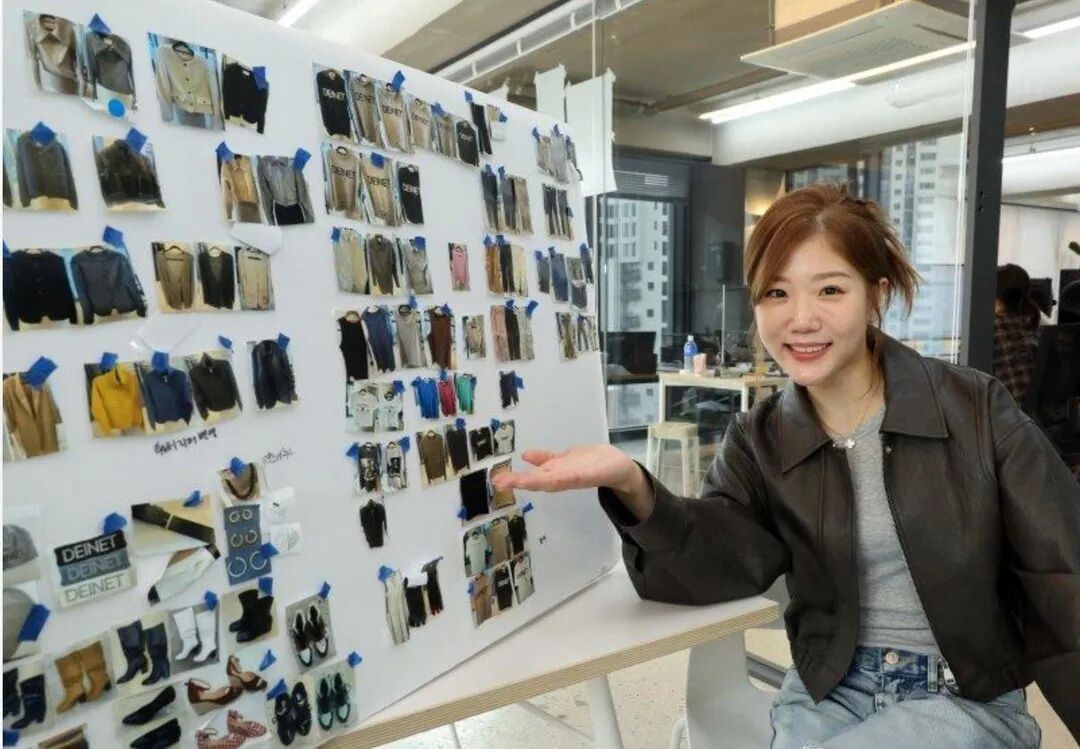
A behind-the-scenes vlog of Kim Da-in preparing new products and setting up her showroom
In the first half of 2020, Wusinsa's gross merchandise volume (GMV) grew 200% year over year, with more than 3,500 brands on the platform. Matin Kim was far from the only designer label to gain traction there. Mardi Mercredi, mentioned earlier, quickly topped the bestseller rankings after joining, recording remarkable sales growth. O!Oi also benefited from the platform's young consumer base, with sales of individual products multiplying.
The following year, MUSINSA acquired women's fashion platform StyleShare and its subsidiary 29CM, ushering in a period of explosive growth. Today, female users account for more than half of MUSINSA's total active user base, making them the strongest engine driving its continued expansion.
A society undergoing a shift in aesthetic preferences, an era of media transformation, and a rapidly growing new sales channel — together, they created the conditions for emerging fashion brands to scale up.
The growth: How does a personal brand become a modern business?
After joining MUSINSA, Matin Kim entered a period of rapid growth. Surprisingly, however, founder Kim Da-in later revealed in several public interviews that, despite the brand's seemingly spectacular success and frequent sellouts, the business was actually on the verge of collapse behind the scenes.
At the time, Matin Kim faced three critical challenges across its supply chain and operations: insufficient production capacity leading to inconsistent quality control, mounting cash flow pressures as the business scaled, and the founder's attention being stretched too thin. Kim Da-in spent her days chasing deliveries and handling after-sales issues, leaving her with little time for new product design or customer engagement. These are challenges that almost every influencer-led brand encounters during a period of explosive growth, often posing an existential threat to the business.
The company that stepped in to address these challenges was HAGO. It extended a strategic investment offer to Matin Kim at a critical moment, and the two quickly found common ground.
Who is HAGO, and why would a highly sought-after rising star brand choose to accept its investment?
This brings us to HAGO's parent company, a mysterious enterprise called Daemyung Chemical. Despite its name suggesting a chemical business, it is in fact a powerful behind-the-scenes force in Korea's fashion industry. Korean media have likened it to "SM Entertainment of the fashion world," with controlling stakes in numerous popular streetwear brands, including KIRSH, O!Oi, and LMC. The industry has dubbed it "Korea's LVMH."
Daemyung Chemical's chairman, Kwon Oh-il, is extraordinarily reclusive. He has never given a media interview, and it is nearly impossible to find a clear photograph of his face online. Even employees have reportedly shared elevators with him without recognizing him. Through his discreet operations and decisive acquisition strategy, he has built an expansive business empire known as the "Faceless Empire."
Daemyung Chemical has multiple wholly owned and majority-controlled subsidiaries, each playing a different role in its broader fashion industry strategy:
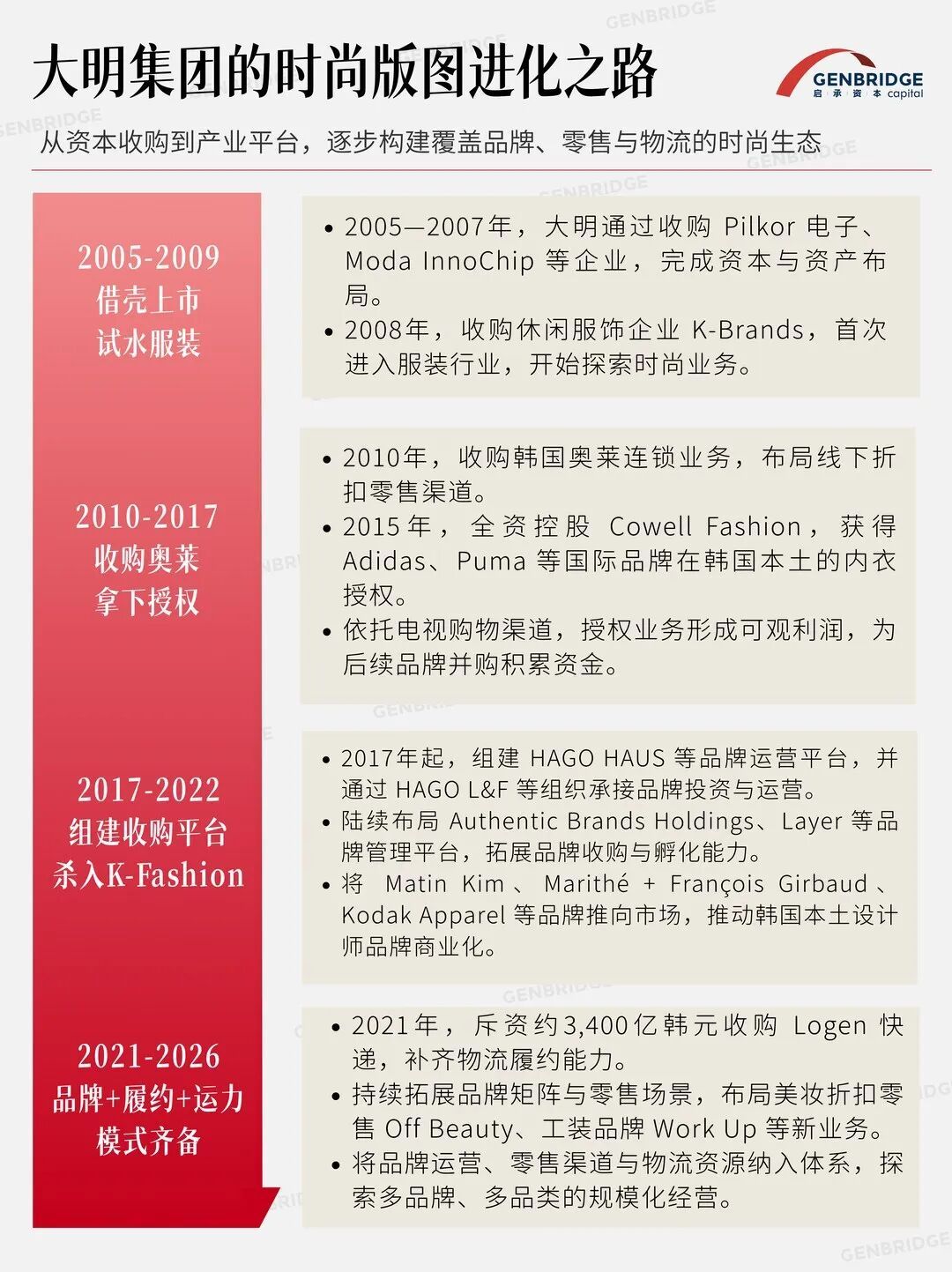
Daemyung Chemical's fashion investment strategy can be summed up in three principles: majority control, creative freedom, and asset-heavy operational support.
Daemyung Chemical takes an assertive approach to investment, typically acquiring majority stakes of 50% to over 80% in emerging brands to secure control, while leaving design decisions untouched. Korean media outlet Fashion Insight has described this model as a "loose federation."
As it expanded its fashion business, Daemyung Chemical acquired the outlet retail chain Moda Outlet and invested in apparel logistics operator Logis Valley SLK. This meant that when investing in brands, the Group already had retail and logistics resources ready to support them. This vertically integrated ecosystem of logistics, distribution channels, capital, and brands has turned Daemyung Chemical into a powerful infrastructure platform.
Following the investment, Daemyung brought in Chae Min-sun (채민선), an experienced fashion industry executive, as Matin Kim's Chief Operating Officer. She contributed expertise in merchandising and operations. In a later interview, Kim Da-in said that working with HAGO had taught her a great deal about product development and opening standalone stores, while giving her more room to focus on the products themselves.
As the business expanded, Daemyung also supported Matin Kim in upgrading its enterprise resource planning (ERP) and other management systems. On the logistics front, Matin Kim was able to tap into the Group's existing resources. In October 2021, Cowell Fashion, a Daemyung Chemical-affiliated company, completed its acquisition of Korean courier company Logen. Matin Kim subsequently transitioned deliveries for orders placed through its Korean website from CJ Logistics to Logen.
With access to Daemyung Chemical's resources, Matin Kim's revenue soared to KRW 15 billion by the end of 2021, reaching 300% of the previous year's level. Its real growth journey had only just begun.
The expansion: How does an online brand establish a strong offline presence?
With its supply chain and operational challenges addressed, Matin Kim reached a critical turning point on its path to scale. Its next challenge was to shed the label of an "influencer-led brand."
Online retail, at its core, sells visual appeal and the personal image of the founder. To evolve into an established designer brand, Matin Kim needed physical spaces where consumers could experience the quality of its fabrics and the details of its designs, reinforcing its more premium market positioning. Gaining acceptance from traditional department stores was an essential step in its transition to the next level.
At the same time, traditional department stores were facing a survival challenge under the pressure of the pandemic. According to Korea's Maeil Business Newspaper, finding powerful brands that could once again draw long queues of consumers in their twenties had become a central strategy for department stores seeking to revive their businesses.
Seizing this opportunity, Daemyung Chemical, with its portfolio of popular fashion brands, rolled out a three-step strategy: pop-up stores, multi-brand stores, and standalone retail locations.
In May 2021, HAGO L&F, a Daemyung-affiliated company, brought Matin Kim to Lotte Department Store for its first pop-up store, generating approximately KRW 300 million in sales over two weeks. A month later, it held a second pop-up at Hyundai Department Store's Pangyo branch, triggering the rare phenomenon known as "Open Run," in which shoppers rush into the store as soon as the doors open. The event generated an impressive KRW 500 million in sales within just one week, giving department store executives a firsthand glimpse of the enormous potential of fan-driven demand in offline retail.
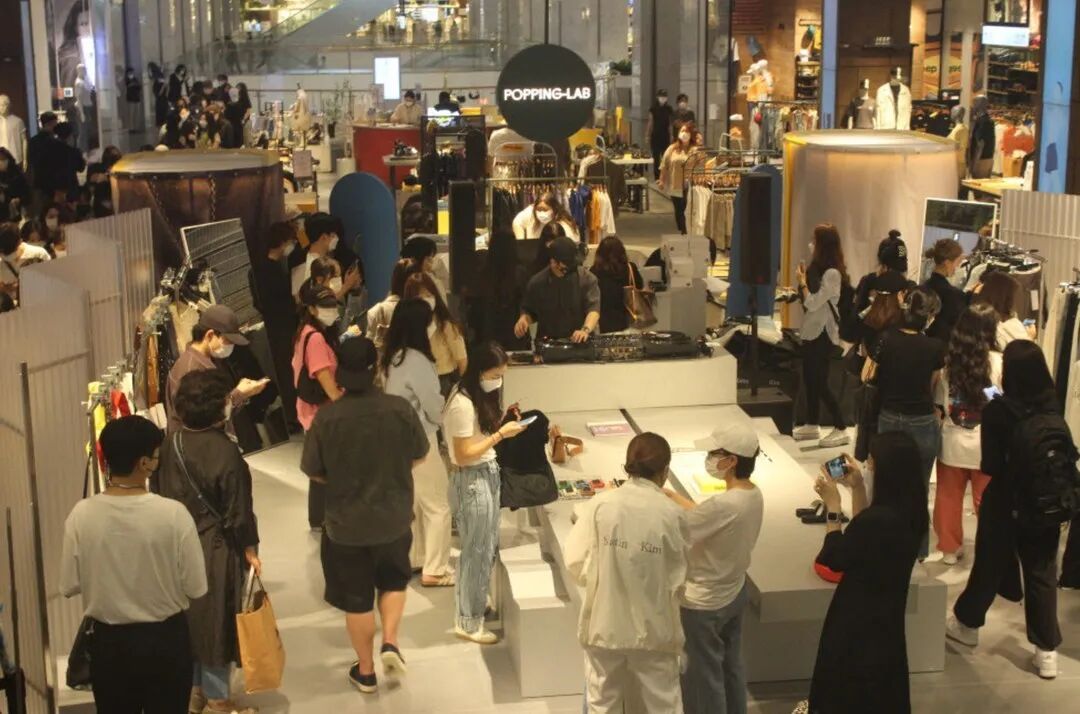
The second Matin Kim pop-up at Hyundai Department Store Pangyo
Matin Kim had become a powerful traffic driver, earning invitations from department stores. It secured not only commission rates well below the industry average, but also prime retail locations in the most prominent areas of these malls.
In August 2021, HAGO L&F and Lotte Department Store launched SHOP16, a multi-brand store at the Dongtan branch. Matin Kim joined alongside 15 other designer brands, allowing customers to try on products and place orders in-store, with purchases subsequently delivered to their homes.
In 2022, Matin Kim opened standalone stores at The Hyundai Daegu and Hyundai Department Store Pangyo. On January 27, 2023, its third standalone store opened on the second basement level of The Hyundai Seoul in Yeouido, Seoul. The store generated KRW 130 million in sales on its opening day, ranking first among all fashion brands in the mall that day, and recorded KRW 500 million in sales within its first week.
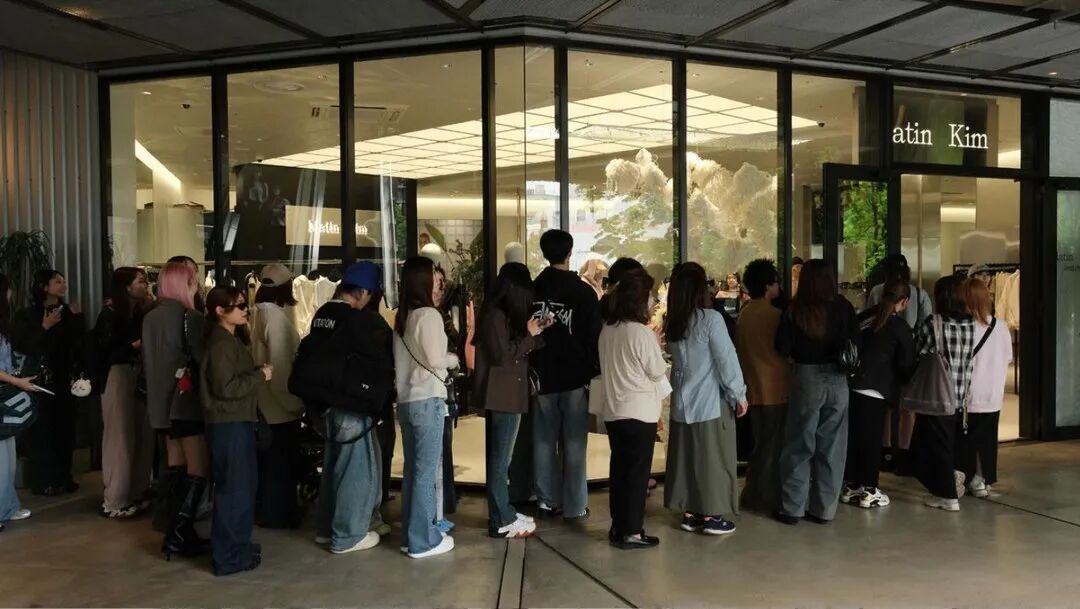
Long queues outside a Matin Kim store
With Daemyung Chemical's support, Matin Kim successfully transformed itself from an influencer-led label into a mainstream Korean fashion brand. By 2023, its annual revenue had reached approximately KRW 77.9 billion, representing growth of more than 400% in just two years. Revenue surged further to KRW 128.8 billion in 2024, nearly doubling again. By the end of 2025, the company's revenue had grown to 27 times its level five years earlier.
The Epilogue: How many more Matin Kims?
After establishing itself among Korea's leading designer brands, Matin Kim turned to overseas markets as its next source of growth.
In 2022, Matin Kim joined MUSINSA's cross-border e-commerce platform, Global Store, and began selling its products in 13 overseas markets, including Japan and Thailand.
In 2023, Matin Kim officially entered the Japanese market. Leveraging Daemyung Chemical's strong channel negotiation capabilities, it launched pop-up stores in leading department stores across major commercial districts in Tokyo, Osaka, and Nagoya, testing market demand while building brand awareness. It subsequently granted MUSINSA exclusive distribution rights in Japan, entrusting it with online and offline sales, marketing, store openings, and retail operations. By this autumn, Matin Kim had opened six stores in Japan, welcoming more than 300,000 customers in total.
Matin Kim is far from alone. Other K-Fashion brands that rose during the same period are also expanding beyond Korea and entering global markets. Their overseas expansion strategies follow a similar playbook: first, they join cross-border fashion e-commerce platforms such as MUSINSA; then, leveraging the channel resources of platforms or investors, they launch a series of coordinated pop-up activations overseas, capitalizing on the momentum of K-Pop to build brand awareness; finally, with support from local partners, they establish a physical retail presence.
In the process, industry giants have extended their commercial reach into an increasing number of countries, and the K-Fashion ecosystem has gradually established a proven model for global expansion.
Today, topics related to Matin Kim and emis have accumulated nearly 100 million views on Xiaohongshu, while those related to Mardi Mercredi and thisisneverthat have each reached tens of millions.
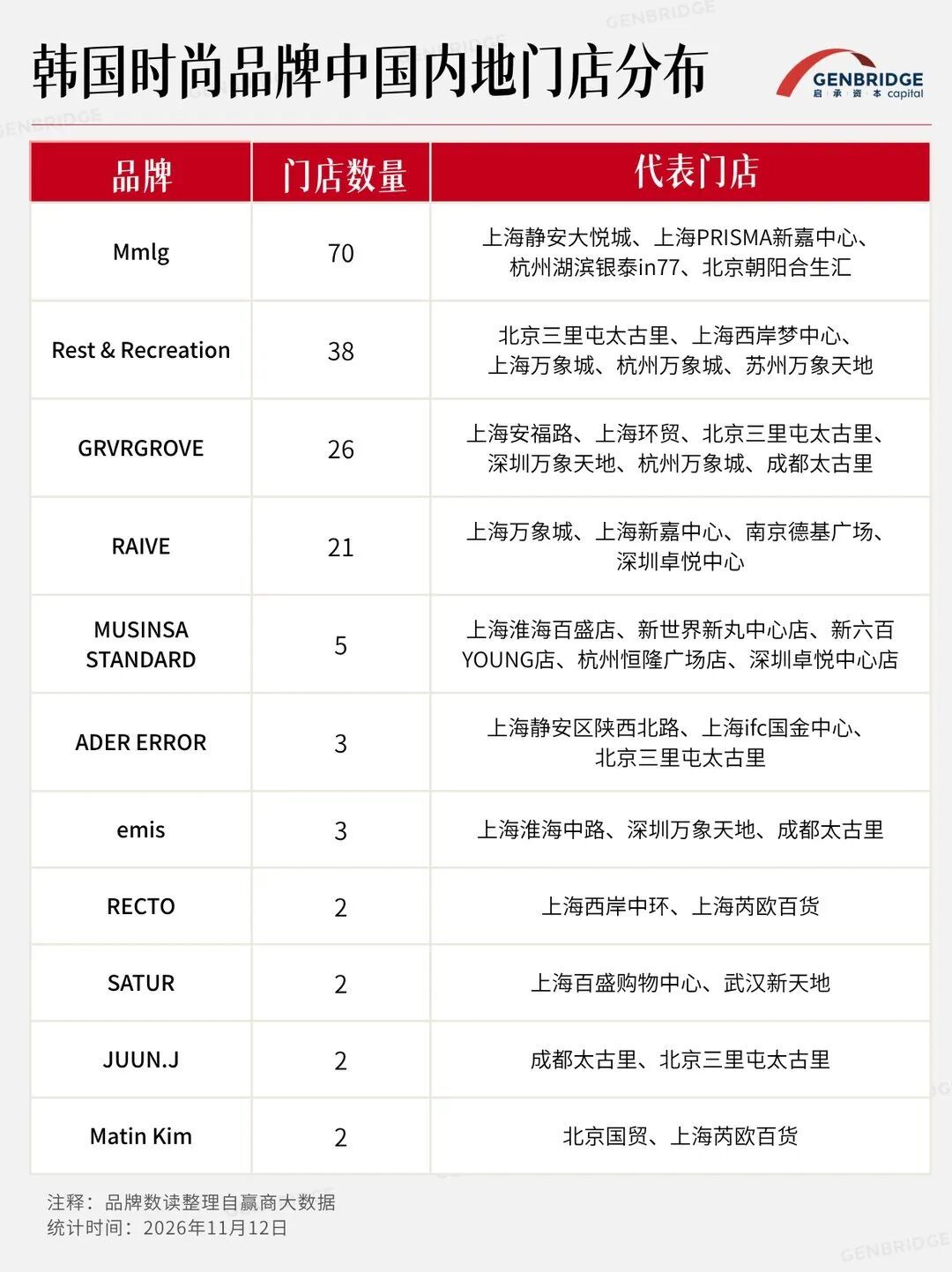
Of course, even as brands like Matin Kim continue their rapid expansion, concerns have also emerged.
In August 2023, Matin Kim founder Kim Da-in stepped away from the brand due to pregnancy and a personal break. Hong Jung-woo, representing HAGO HAUS, a Daemyung Chemical subsidiary, took over as CEO. The announcement sparked an immediate outcry across Korea's fashion industry and among the brand's most loyal fans: "Without Kim Da-in, does Matin Kim still have its soul?"
There is no answer to that question yet.
However, several months before Kim Da-in's departure, HAGO HAUS had already announced plans to replicate the Matin Kim model and develop a new generation of flagship brands. Bag brand depound is one such example. Like Matin Kim, it first built its following on social media before gradually entering department stores with the Group's support. By 2026, it had maintained double-digit growth, opened 22 stores, and begun exploring overseas markets.
Kim Da-in, meanwhile, has remained active since leaving Matin Kim. After giving birth in 2024, she launched a new brand, DEINET, which secured investment from Korean fashion group Sejung. In 2025, DEINET joined W Concept, an e-commerce platform for designer brands. According to Newsis, approximately two years after its launch, the brand had reached KRW 10 billion in sales.
Perhaps the question of whether a brand has a soul is no longer quite so important. Even if one Matin Kim falls, thousands more are waiting to rise. That is the answer offered by the K-Fashion industry as a whole.
References
《Anta’s First Investment in a Korean Streetwear Brand Hinges on China》| Huang Shan, Jiemian News, 2025
《From an online community featuring street snaps to a game changer in the Korean fashion industry》|MUSINSA,Official Newsroom,2023
《무신사 스냅은 ‘패션 버티컬 SNS’가 되길 원한다》|신승윤,Byline Network,2022
《2025 무신사 트렌드 결산 리포트》|MUSINSA,2025
《무신사, 올해 ‘동반성장’ 생산 지원금 521억 지원》|이국현,Newsis,2021
《무신사, 2025년 매출 1조4679억원…매출·이익 ‘사상 최대’ 달성》|정다은,电子新闻(전자신문),2026
《‘사람’에게 투자하는 섬김의 리더십》|황연희,Fashion Insight,2019
《마뗑킴·하고엘엔에프 K패션 투자왕의 정체》|이나래,여성동아,2022
《마뗑킴 팬덤은 ‘뗑며드는’ 마력에서 출발하죠》|황연희,Fashion Insight,2022
《무신사, 트렌디한 모던 시크룩 브랜드 ‘마뗑킴’ 단독 입점 F/W 신상품 할인》|이동천,TENANT News,2020
《히트 상품 제조기 ‘Matin Kim’》|황연희,Fashion Insight,2022
《택배사 변경 안내》|Matin Kim, Offcial Website,2022
《롯데百 동탄의 O4O 실험...재고 없는 의류매장이 온다》|이현승,ChosunBiz,2021
《명품도 아닌데 ‘오픈런’ 부른 마뗑킴…“일주일만에 매출 5억”》|최아영,每日经济(매일경제),2023
《[패션컴퍼니 히스토리 23] 진행형 ‘마뗑킴’ 성공 신화, 국내 넘어 글로벌로 잇다》|김숙경,Fashionbiz,2025
《‘패션 3마’ 엇갈린 실적… 마리떼 1위 굳혔다》|강명연,Financial News(파이낸셜뉴스),2026
《[단독] 일본서도 팝업 열면 오픈런…K패션, 도쿄 최대 번화가에 1호점 낸다》|김효혜,每日经济(매일경제),2025
《[단독] ‘1000억 신화’ 마뗑킴, 김다인 대표 사임》|김진희,News1,2023
《마뗑킴 성공전략 이식…하고하우스 드파운드 급성장》|안혜원,韩国经济(한국경제),2026
《잘 나가던 마뗑킴·런베뮤·티르티르 창업자, 엑시트 이후 엇갈린 행보》|권민지,Newsis,2026