

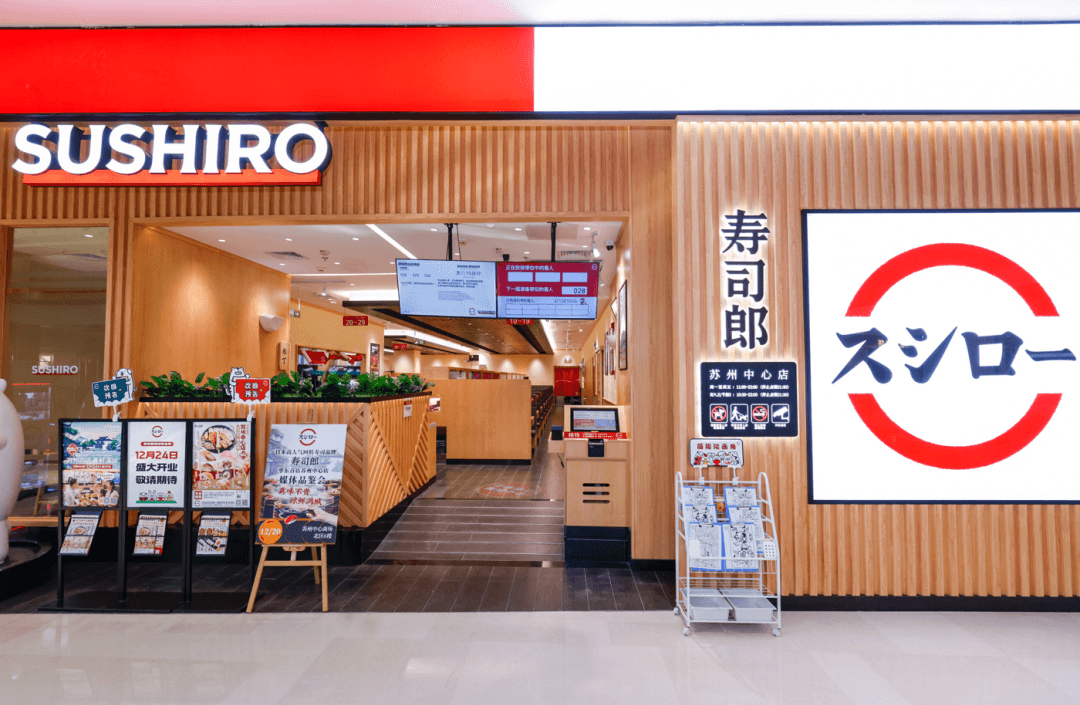
Amid slowing restaurant growth, a new “queue champion” has emerged in China’s top-tier cities — Sushiro, the Japanese conveyor-belt sushi chain. From Beijing to Guangzhou, Shenzhen to Hong Kong, peak dining hours often require at least a two-hour wait, and clusters of customers crowding the entrances have become a striking scene in shopping malls.
Alongside its surging popularity, Sushiro’s performance has been remarkable. Driven by strong expansion in China, FOOD & LIFE, Sushiro’s parent company, has seen its share price rise to 2.7 times its level two years ago, while Kurasushi Holdings, the parent company of Hamazushi, has more than tripled since 2021.
A review of these highly popular Japanese F&B brands in China reveals that they all originated during Japan’s “Lost Three Decades.” Beginning in the 1990s, Japan entered a prolonged era of deflation and stock-based competition. High unemployment forced consumers to become cautious, compelling restaurant companies to compete aggressively on price.
To survive, companies like FOOD & LIFE, Kurasushi Holdings, and Saizeriya embarked on extreme cost-reduction and efficiency-enhancement strategies—eventually emerging as long-term winners and industry leaders.
This article not only dissected Sushiro’s business model and the conveyor-sushi format, but also reviewed 30 years of evolution in Japanese dining, as well as the emerging wave of Chinese F&B brands expanding into Japan. We hope these insights prove helpful.
The essence of conveyor-belt sushi is an assembly-line factory
Assembly-line efficiency is the defining characteristic of conveyor-belt sushi’s development path.
The restaurant industry actually consists of three components: service, retail, and production. It is simultaneously manufacturing, retailing, and service. Brands like Sushiro shift the manufacturing process upstream — because sushi is not inherently difficult to prepare, they break free from traditional dining logic and apply industrial-production thinking to reduce uncertainty in service and retail, fundamentally re-engineering the workflow.
From an operational perspective, conveyor-belt sushi is not naturally attractive to restaurateurs due to high initial investment. In Japan, opening a typical conveyor-belt sushi outlet requires RMB 10–15 million, with some reaching RMB 20 million, and a payback period of 5–6 years.
Moreover, the model in Japan carries low gross margins and high labor costs. What keeps these businesses alive is exceptional operational efficiency and high per-store volume — a classic high-turnover, low-margin model.
The success of conveyor-belt sushi in China contains elements of both coincidence and structural advantage.
In terms of business model, China’s relatively lower labor costs and higher average ticket compared with Japan enhance profitability, making “high-volume, high-margin” feasible and strengthening the model’s advantage.
Meanwhile, financial data shows that Sushiro and Hamazushi truly surged in popularity around early 2024 — coinciding with one of the toughest periods for shopping malls, marked by declining foot traffic, more cautious consumers, and very visible wallet tightening. It was precisely at this moment that the value-for-money advantage of conveyor-belt sushi became highly pronounced.
In terms of taste, Sushiro is similar to Japanese conveyor sushi, but its menu is heavily localized, with many offerings tailored to Chinese consumers, richer toppings, and additions such as cheese on traditional sushi.
From the perspective of average spending, Sushiro is not cheap compared with typical mall restaurants. In other words, its popularity actually runs counter to “consumption-downgrade intuition.” Its success comes more from striking a balance between high perceived value for users and extreme operational efficiency.
On one hand, Sushiro benefits from being the affordable option within a premium category. Sushi in Chinese consumer perception naturally signals high value and high price: fish is inherently expensive, and premium omakase sushi has become deeply rooted across major cities, with RMB 300–500 per person widely accepted. Yet for years, the market lacked an affordable solution within the premium-Japanese category. Sushiro and Hamazushi happen to fill this gap.
On the other hand, Sushiro operates as an efficiency-driven factory. From an investment perspective, conveyor-belt sushi is a heavy-asset business in both upfront cost and payback period. Yet Sushiro turns this into a “fast-return” business through table-turn rates far exceeding most F&B formats. The foundation is a factory-style logic brought into the store: sushi is easy to standardize, and stores are designed as efficient assembly lines — once a customer sits down, they are effectively positioned at the end of the production line, responsible only for eating and paying.
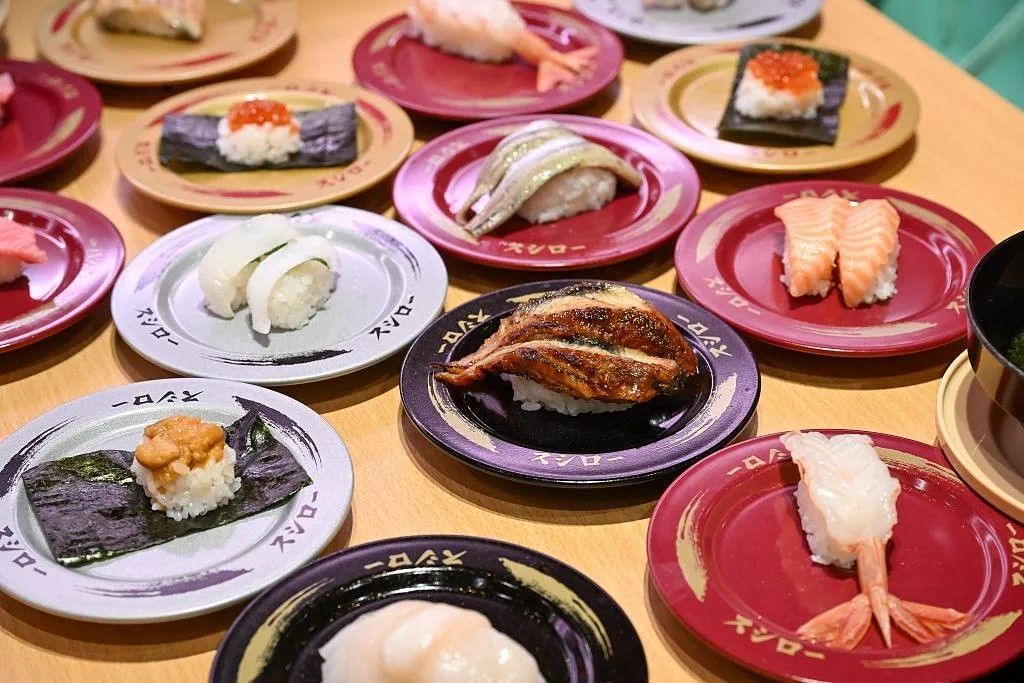
Therefore, for conveyor-belt sushi, efficiency improvement is paramount, and the core goal is “higher efficiency, fewer staff, and lower waste.”
Specifically, conveyor-belt sushi carries food-cost ratios as high as 40–50%, making cost reduction especially critical. Efficiency gains and waste reduction are the two biggest levers in altering cost structure, and both rely heavily on technological progress.
Looking at its development history, conveyor-belt sushi has roughly progressed through four stages from 1.0 to 4.0:
Stage 1.0: Price Transparency. In the 1960s, most sushi restaurants listed prices as “market price,” making it difficult for customers to estimate spending. Some restaurateurs later believed this discouraged consumption and began pricing according to the annual average cost of ingredients, using transparent pricing to attract customers.
Stage 2.0: Adoption of Conveyor Format. Early conveyor-belt sushi was simple: two or three chefs behind the counter prepared sushi, about 50–60 seats were arranged around a circular belt, and chefs placed sushi directly onto the belt for customers seated along the counter to pick up.
Stage 3.0: The modern model emerged. After the 1990s, conveyor paths evolved into M-shaped layouts; stores expanded to 500–600 square meters with around 150 seats and booths for groups of four. Sushi chefs could now work entirely in the back kitchen without appearing in front of customers.
Stage 4.0: The Sushiro Model. Around 2010, a wave of technological and experiential upgrades emerged. An automated checkout system appeared in 1999; freshness-management systems in 2001 (discarding any plate after 350 meters of circulation); touchscreen ordering in 2005; and express lanes in 2007 that deliver customized orders directly from the kitchen — marking a major shift in the last decade: conveyor-belt sushi no longer actually “conveys.”
RFID was also introduced for SKU-level management, enabling staff to know exactly how many customers ordered each item at specific times, reducing waste and improving demand forecasting. After 2010, automated dish-and-utensil cleaning systems and other technologies continued to emerge.
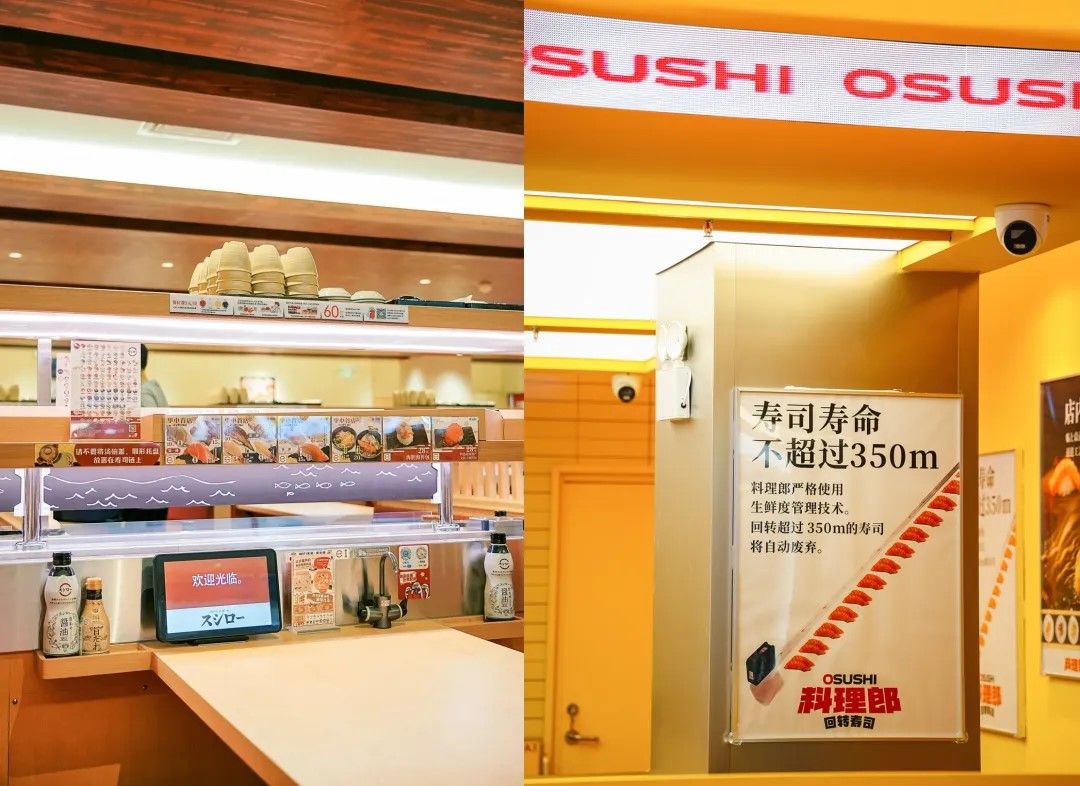
A restaurant’s core competitiveness lies in its table-turn rate; the number of customers served per day determines revenue. Historically, many factors reduced table turns: slow food delivery, difficulty finding desired items on the belt, or unresponsive staff. Today’s design reduces such uncertainty through technology, minimizing time waste. The extremely high efficiency sometimes gives consumers the feeling of being “force-fed,” which ironically highlights its efficiency advantage.
Another dimension of evolution is waste reduction. In the 1990s, conveyor-belt sushi waste rates were around 13%, because restaurants could not predict when customers would arrive or what they would eat; they had to constantly produce items, many of which spoiled on the belt and were discarded. Over the past two decades, technological advances in demand forecasting and customization have allowed restaurants to avoid over-preparing or over-defrosting ingredients. Today, top brands have lowered waste rates to around 1%.
The evolution of Japanese dining in an era of deflation
During Japan’s “Lost Three Decades,” the country remained trapped in a prolonged, spiraling deflation. Under such conditions, consumers’ dining budgets continuously contracted, leading to a gradual shrinkage of the entire foodservice industry.
Over the past 30 years, much of Japan’s innovation has revolved around vertical integration — from Uniqlo to Daiso to MUJI. Despite surface differences, these companies all rely on vertical supply chains to achieve value-for-money economics by controlling production internally and reducing intermediate layers.
For example, Saizeriya’s defining strength lies in optimizing both store operations and its supply chain simultaneously.
In terms of store optimization, consider Saizeriya’s pasta: it evolved from being cooked from dry noodles, to being prepared from frozen noodles, to the current version, which is heated directly from sealed packs. This continuous simplification reduced kitchen size, increased output speed, and lowered the overall complexity and labor intensity of kitchen operations.
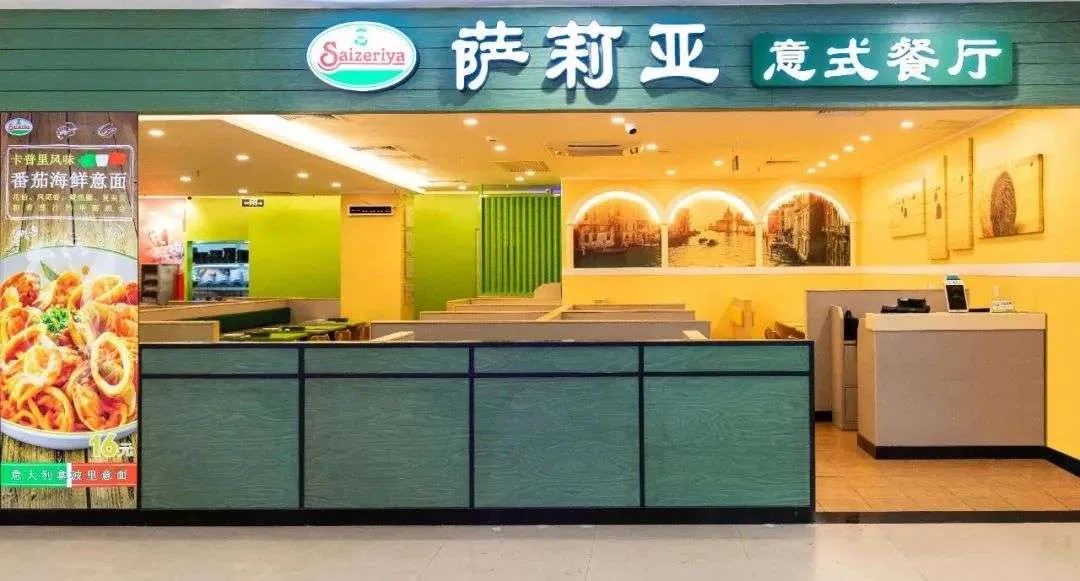
On the supply chain side, Saizeriya achieves value through vertical integration. Japanese agriculture involves multiple intermediaries — cooperatives, distributors, and farmers — which leads to two problems: lack of freshness and elevated price.
To address this, Saizeriya vertically integrated core items with high consumer sensitivity, such as lettuce. Fresh produce is inherently expensive in Japan, and freshness is easily detected by consumers — especially in salads. By providing fresh, low-cost lettuce through its own supply chain, Saizeriya strengthens customer trust.
The essence of “cost reduction and efficiency improvement” lies more in “improving efficiency” than in simply “cutting costs.”
In Japan, companies that survived the last three decades did not do so merely by saving money. Their core advantage was delivering deeply on what consumers value. Even when the entire industry adopted ready-made food to reduce costs — including upstream suppliers — the winning companies still identified unique value points appreciated by consumers. “Fresh cooked” is one such example.
Consumer demand for “freshness,” customization, and a sense of human touch often concentrates on a few key experiential moments — such as limited-time items, on-site preparation, or interactive elements. Businesses skillfully embed these peak experiences into otherwise standardized models, enhancing customer perception while maintaining operational efficiency. Just like conveyor-belt sushi arriving directly before the customer, creating the illusion of personal attention — the core skill lies in “performance.”
Balancing standardization with theatrical fresh preparation is a true craft.
Take Marugame Seimen, a Japanese udon chain. It retains the process of fresh udon-making: dough prepared ahead of time, cut and boiled on-site. This creates the illusion of real-time preparation — as long as chefs appear busy, customers perceive freshness. According to sensory perception theory, aroma and visuals often outweigh taste in food enjoyment. Therefore, such stores that preserve a “lively kitchen” with open cooking environments tend to be more appealing.
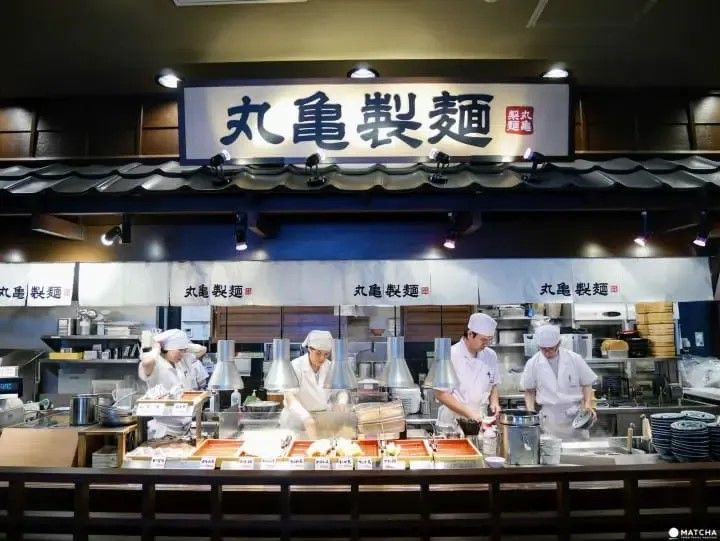
Commercially, Marugame Seimen’s economic model is also highly compelling.
Its gross margins are high — the core ingredient is flour, producing margins of 60–70%, with some basic items reaching 90%. At the same time, operational efficiency is exceptional: the chain’s most important metric is “time from order to bowl in hand.” Its counter-style assembly-line layout enables customers to receive their udon within 20 seconds of ordering. Combined with how quickly udon is consumed, throughput during peak hours is extremely high. A 100-square-meter store can serve 100 customers in 30 minutes, reinforcing consumer confidence that “if you’re in line, you’ll definitely get your noodles soon.”
Udon is essentially modular, like LEGO, but the presence of on-site preparation makes customers forget this. Conveyor-belt sushi is even more so. Even under deflation and consumption downgrades, consumers do not only seek value-for-money — they also want experience. As chain restaurants scale, efficient “assembly-style” models inevitably emerge. The key question becomes: how to deliver a superior experience on top of a modular product? That is where brands differentiate.
Lessons from Japanese dining: Borrow, not copy
Japan has pursued cost reduction and efficiency enhancement for 30 years, but “cost-down” has had deeply negative consequences for Japanese society. By continually squeezing profit margins — pressuring suppliers and labor — the country entered long-term deflation. Ultimately, those most hurt were the generations entering the job market in the 1990s; their wages have barely grown even today, and the resulting lack of security has constrained creativity.
This is the core issue of Japan’s “Lost 30 Years”: society prioritized saving money rather than innovation. The negative effects of relentless cost-cutting are long-term and generational. Therefore, Japan’s experience should not be blindly copied — cost reduction is not the only path forward.
Objectively, China and Japan differ greatly in their dining ecosystems, so the transferability of Japanese restaurant experience is limited. One must avoid rigidly copying Japan’s model; it is rooted in Japanese soil. To apply Japanese lessons to China, one must first understand the fundamental contextual differences.
For example, cuisine types differ significantly: Japanese food is more suited to ready-made formats with many cold dishes, while Chinese cuisine often requires fresh stir-frying. Supply chains also differ: many Japanese companies vertically integrate to reduce production costs, but China’s ingredient supply is highly diverse and geographically dynamic. Unless the volume demand is massive (e.g., lemons for Mixue Bingcheng), Chinese brands need not build proprietary supply chains — allowing upstream competition is often more advantageous. Labor structures also differ: labor is expensive in Japan, with a high proportion of part-time workers; labor accounts for 20–25% of Sushiro’s costs in Japan, whereas labor cost ratios for most Chinese restaurants are roughly half that.
For restaurant brands today, founders must not shift the responsibility of innovation onto others. When everyone tries to “copy homework,” the industry falls into a prisoner’s dilemma of mutual imitation, where no one achieves the best outcome. Chinese brands need to refocus on “serving today’s Chinese consumers.”
On this basis, the most valuable element China can borrow from Japan is “performance.” Different cuisines differ in compatibility, but the awareness of performance is transferrable. Japanese dining, although heavily standardized and pre-prepared, still delivers “kitchen vitality.” The art lies in creating unique experiential peaks at key touchpoints atop a standardized supply — this balance is the wisdom of Japanese dining. Brands that master it gain higher value and broader market potential.
In Japan, restaurant brands that succeed long-term share one characteristic: they know how to “perform.” Chinese cuisine entering Japan must also adopt this performance-oriented approach — simple supply chains, strong in-store experiences, and affordable prices. Many Chinese brands entering Japan today demonstrate this capability.
Beyond “performance,” deeper structural reasons explain why many Chinese brands succeed in Japan. Take Yang Guofu and M Stand as examples:
Yang Guofu’s success did not come from “performance,” but from timing. In dining, the rule of thumb is: in economic downturns, strong-flavored foods sell well; in good times, lighter foods prevail. Although Japan’s macroeconomy has shown signs of recovery, young people’s incomes have barely grown. The market lacks strong-flavor options. Yang Guofu’s mala soup filled this gap, offering flavors curry cannot provide, targeting mainstream consumers, while being relatively low-carb and less oily, giving a perception of healthiness.
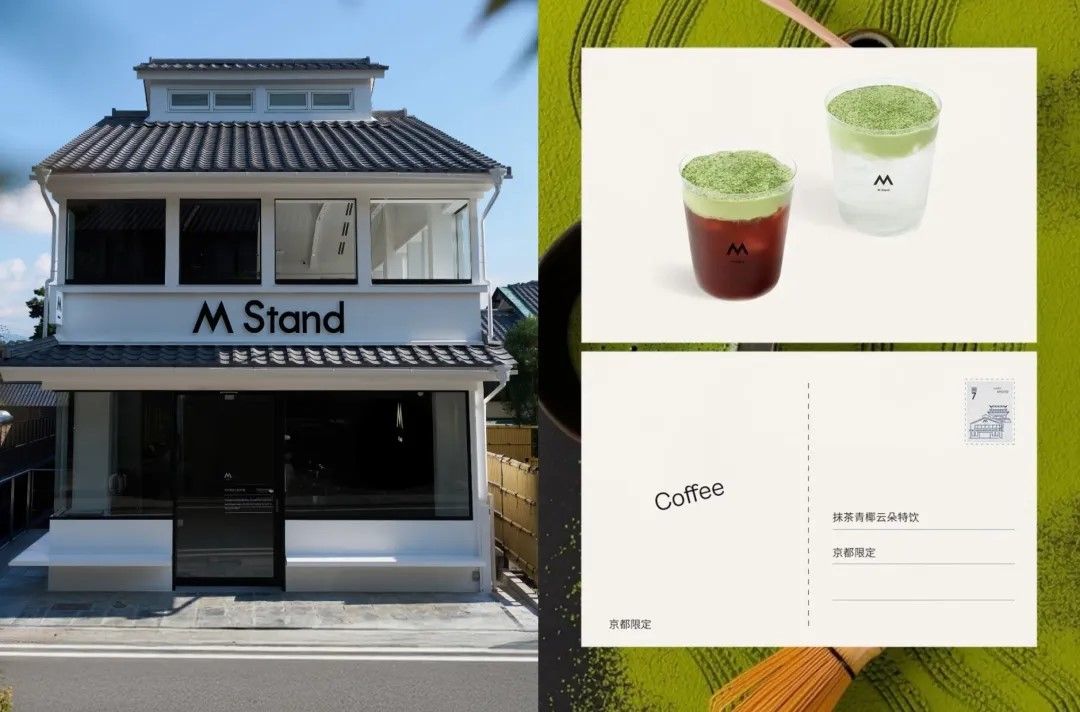
M Stand’s advantage in Japan is its “lack of baggage.” Japanese consumers are obsessed with roast levels and bean origins — they compete over raw material purity. In China, coffee is an imported category, and consumers seek “coffee as a beverage,” not purist black coffee. Japan has not undergone this beverage-ization trend. M Stand introduced China’s version — such as matcha coconut latte — flavors uncommon and unlikely to emerge from Japan’s endogenous market, effectively bringing a new coffee culture to Japan.
Japan’s aging demographics predispose its society toward linear, incremental innovation rather than breakthrough innovation. Chinese restaurant brands expanding into Japan demonstrate to Japanese peers the importance of letting go of entrenched assumptions. Japanese companies tend to hold fixed beliefs, but categories evolve differently across countries. Foreign entrants help Japanese businesses release their preconceived notions and embrace new possibilities.
At present, we offer two recommendations for Chinese restaurant brands expanding into Japan.
First, Japan’s F&B returns are lower and payback periods longer. Even top Japanese restaurant chains have net margins below 5%. Chinese founders must manage expectations: the early phase may be challenging, but long-term returns are stable.
Japan’s advantage is stability. Once a brand gains footing, a single store can operate steadily for 10 years. New formats and flavors fade slowly; the market is slow to adopt new brands but highly loyal once they do. Social conditions and commercial leases are stable, and vicious competition is rare, giving each store greater long-term value.
Second, founders should be hands-on in critical matters and avoid outsourcing. Many hope to profit from information asymmetry, but language barriers often mean the “feedback” they receive is filtered or distorted. This information gap is dangerous. Founders must personally understand the local market and users.