


As a consumer investor, the question I have been asked most often over the past two years is: “With the consumer sector being so cold, why are you still investing in it?”
Indeed, we all witnessed the heyday of China’s “new consumer” wave in 2021. Fueled by channel dividends and shifting consumer demand, the sector quickly became the next hot trend, intensifying competition and driving up market costs. Later, as the external environment cooled and quick money was no longer to be made, capital gradually withdrew, leaving behind a series of stories of failure.
In fact, there are two very different ways of looking at China’s consumer sector today: the capital perspective, which focuses on valuation, and the industry perspective, which focuses on development.
From a capital perspective, as the AI narrative has taken center stage, consumer assets perceived as “less exciting” have been priced at levels close to their lows of the past decade or more.
But from an industry perspective, the retreat of capital is accelerating the exit of inefficient brands that lack a strong core business and rely on cash-burning strategies, amplifying the perception of an industry-wide decline. Meanwhile, the “top students” that established omnichannel coverage early and built deep supply chain capabilities are gaining both market share and profitability, leading the consumer industry into its next stage of growth.
Human nature is such that we celebrate when we catch the tailwind, and lose heart when we fall into a downturn. Yet the outstanding founders I have encountered all share one common trait:
They possess a strong sense of existential urgency and a powerful drive for self-actualization. They neither stop to celebrate success here and now, nor allow external criticism to diminish their own conviction. Instead, they remain committed to the first principle of being “consumer-centric,” willing to do the hard, unglamorous work at every step simply to deliver better products and better experiences to consumers.
Luck may determine your upside and how far you can stretch, but capability is what protects your floor and your downside. That is precisely why these outstanding consumer companies are able to navigate cycles and continue growing against the tide.
There is a passage in Zen and the Art of Motorcycle Maintenance, a book I particularly like: reading every manual and knowing every specification may still be less useful than having an experienced mechanic sit on the motorcycle, give it a kick, feel the vibration, and listen to the exhaust to identify where the problem lies.
Consumer is an industry much like this. Smart people are often very good at studying dividends, trends, and data, and these can help a company scale rapidly. But to build a business that lasts, there is no substitute for long-term dedication and a return to the fundamentals—the painstaking work of building products, channels, organizations, and supply chains.
This is precisely what makes consumer so compelling: no matter how technology evolves, it remains, at its core, a business deeply connected to people. Here, the rewards of the long term will always belong to brands that are willing to do the hard, unglamorous work while retaining experience, discernment, and empathy.
Brand growth is a series of discontinuous leaps
China’s consumer market is undergoing a sharp “K-shaped divergence”: ordinary companies are struggling for survival, while the top performers continue to thrive.
Take the downturn in the property market, for example. Yeswood continued to grow, surpassing RMB 20 billion in revenue and overtaking IKEA China. After the new Chinese-style baking boom faded, Luxihe, which built its business around classic peach pastries and everyday family snacks, began expanding nationwide. Dragon Tooth, a tactical apparel brand that originated in a niche community of military enthusiasts, doubled its performance last year through audience expansion and offline experiences, reaching nearly RMB 1.7 billion in revenue.
Behind these “top performers” lies comprehensive efficiency. They have generally expanded their business footprint, building capabilities across channels and the entire value chain, while investing in long-term brands that are deeply connected with consumers.
Any brand focused on a single channel or one link in the value chain will inevitably face pressure from outside competitors. Without expanding its footprint and putting down roots across different areas, a business model remains inherently fragile.
Over the past decade, channels, media, and supply chains have undergone repeated transformations, each one eliminating a new group of companies. Brand growth may appear continuous, but in reality, it is built through a series of discontinuous leaps.
If the direction is so clear, why do so many companies still find themselves stuck?
First, it comes down to the founder’s own sense of urgency.
After achieving success at a certain stage, the easiest mistake for a company to make is to attribute the outcome of broader tailwinds or shifts in consumer behavior to its own decisions, and then institutionalize the methods that once worked.
Yet in consumer, there is no absolute or static moat. The true moat lies in a founder’s ability to continuously update their understanding and shape the organization to adapt to the next wave of change. This is what we often call “the ability to evolve.”
Second, it is empathy for consumers and the ability to operate with depth.
Consumer is inseparable from people’s inner lives and everyday lives. The ability to think from the consumer’s perspective and with genuine empathy is a capability every consumer brand must develop, particularly in today’s AI era.
People often ask: will the AI wave change the way we evaluate consumer companies? I believe 70% of it will remain unchanged.
No matter how powerful technology becomes, brands still need to answer a few fundamental questions: Can they understand consumers? Can they reach more consumers? Can they deliver compelling value and consistent quality? Can they build an emotional connection with consumers? Human intuition and taste are becoming the most fundamental and irreplaceable elements in the consumer industry.
AI can play a role in the remaining 30% by serving as a more efficient tool for data collection and decision support. Even then, however, the ability to use these tools effectively still depends on people.
While everyone else is chasing new traffic and new brand identities, the founders we invest in are quietly building out their upstream supply chains. While others are talking about using digitalization to transform decision-making, they are focused on building organizations with stronger execution. These deep operational capabilities are what bring businesses closer to their consumers.
Consumer is not about cleverness, but the craft
Many people overestimate the power of tailwinds. But consumer has never been an industry won by novelty or trends alone. What truly matters is the craft of building a business. I’d like to illustrate this through several cases.
The first case is Yeswood. As the property market entered a downturn, the home furnishing industry also fell into a deep winter. Yet Yeswood continued to grow, surpassing RMB 20 billion in revenue and overtaking IKEA China.


Yeswood started with a 100% solid wood bed. Riding the combined trends of online retail, healthier living, and value for money, it carved out a fast-growing niche in an otherwise stagnant furniture market.
As its business expanded, Yeswood did not stop there. It broadened its category footprint from the bedroom to the entire home, and from solid wood to upholstered furniture, offering consumers a range of materials and price points. Today, it has more than 20,000 products on sale, with annual mattress sales alone reaching well over RMB 1 billion.
Behind this expansion is the founders’ determination to define industry standards and take on the harder things that few others are willing to do. When moving offline, Yeswood chose not to enter traditional home furnishing malls, but instead insisted on opening stores in shopping centers closer to consumers. It now has 1,700 stores nationwide. At the front end, it provides customization, delivery and installation, and after-sales services; upstream, it manages hundreds of factories and has even become one of the largest purchasers of North American timber.
At many points along the way, Yeswood could easily have deviated from its original path: adding a little engineered wood where consumers might not notice, or raising prices in line with the industry’s three- to fourfold markups. Both could have boosted short-term profits. What is most remarkable, however, is that in the face of repeated temptations, it has continued to hold firm to the choices it made at the very beginning.
The second case is Luxihe.


The new Chinese-style baking sector experienced a bubble in 2022, and many once-popular brands quietly exited the market. At the time, the prevailing playbook was to attract young consumers with innovative products, then open stores in high-cost, high-traffic locations.
At the time, expectations for consumer businesses had become somewhat excessive. Seeing a store generate RMB 100,000 in daily sales, people would extrapolate linearly to 500 future stores, rarely considering that once the traffic faded, daily sales might not even reach RMB 5,000. The baking business was being reduced to an overly simplistic equation.
Luxihe was different. Its signature peach pastry may be traditional, but it benefits from strong repeat purchase and consumer mindshare, allowing it to reach families and a broader range of age groups. This also enables the brand to choose more cost-efficient locations on streets and within communities. Its overall business model is therefore better able to withstand fluctuations in traffic.
Luxihe also seized the opportunity presented by the nationwide expansion of shopping centers. It entered different cities through standardized channels while using street-front stores to penetrate local communities. These two routes complemented each other and ultimately enabled the brand to build a nationwide chain.
Its rapid yet stable expansion was enabled by earlier and heavier investment in the upstream supply chain than many regional players. Once a nationwide chain was established, product innovations from individual stores could be quickly replicated across hundreds of locations. Take butter rice cakes, for example. Luxihe was not the first to create them, but its ability to rapidly adapt the supply chain allowed the product to scale quickly and generate significant growth momentum. This created an overwhelming advantage over regional and non-chain brands.
With its nationwide brand presence and supply chain foundation, Luxihe’s retail products can move into Sam’s Club, key accounts, and online channels faster than other baking brands. Once stores, retail, and supply chain form a triangle, they create a more stable growth structure for the next stage.
“Consumer-centricity” is the first principle
All the craft ultimately comes back to the first principle of being consumer-centric. As long as you truly understand the pain points of everyday life, there is always an opening to be found, even in a crowded market.
For example, the home cleaning technology industry may appear highly crowded, yet two clear gaps remain:
The first is the price band. At one end are products under RMB 1,000 competing on extreme value for money; at the other are products above RMB 2,000 competing on specifications. There are few well-established players in between.
The second is consumer value. Many brands in the higher price tiers tend to emphasize technology at the expense of the user. How technology translates into real-life use cases, and how specifications translate into actual user benefits, requires a long-term commitment to the right values and sustained investment.
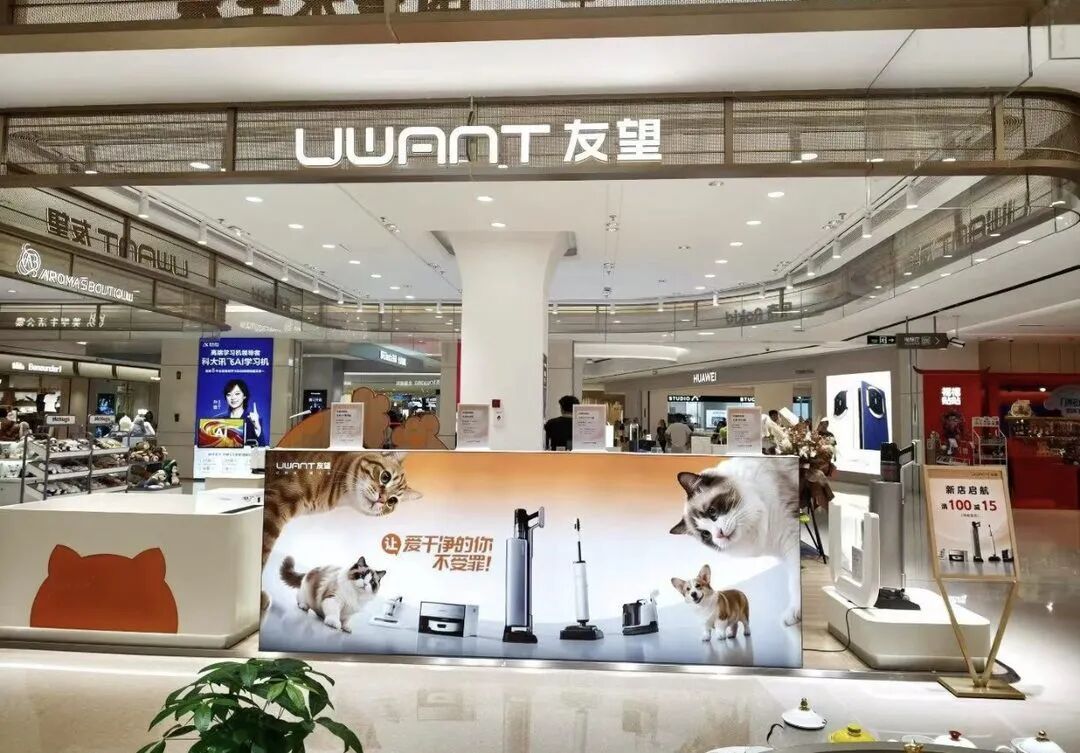
UWANT grew out of these two market gaps. The founder uses the products every day as a super-user and stays closely connected with consumers, continually identifying new pain points and turning them into directions for product development.
While others focus on stronger suction and faster rotation, UWANT asks why someone might suffer back pain after mopping the floor after work, or why long hair keeps getting tangled in the machine. Its push-in floor washers and integrated sweeping-and-vibrating products are all designed around these real pain points.
Once the product is developed, its differentiation still needs to be communicated to consumers. UWANT translates specifications into real-life scenarios. Rather than simply saying “stronger suction,” it is more likely to ask, “Can we make things a little easier when you come home from work?” This ability to speak the language of consumers and recreate real-life scenarios is a key source of its differentiation from other players.
Many of our founders themselves have a deep passion for and conviction in a particular way of life. As a result, their brands have a stronger ability to resonate with consumers and address their real pain points.
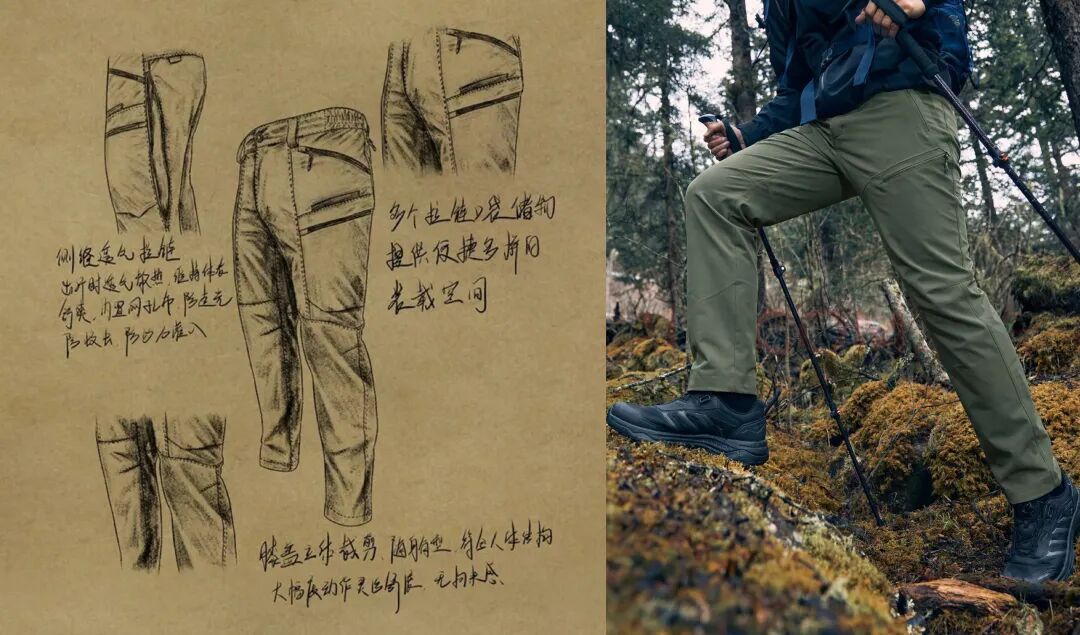
Take Dragon Tooth, the tactical apparel brand, for example. Many people wonder why Dragon Tooth enjoys such high consumer loyalty. The answer lies in the brand’s sustained investment in its products.
Dragon Tooth observed that men often struggle to find well-fitting trousers online, so it developed a comprehensive sizing system. For some products, combinations of colors, cuts, and sizes can number as many as 60 or 70. This innovation addresses a common problem in menswear, giving the brand an appeal that extends far beyond its “tactical” positioning.
In the process of co-creating with the brand, we found that founder Jiang Lei has a deep passion for the category. With a background in materials science, he brings an almost academic level of candor to product development. He objectively explains why a particular fabric was chosen for each generation of products and what problems it solves, while also acknowledging its remaining shortcomings. This communication gives consumers a sense that the brand truly practices what it believes.
Consumers therefore choose Dragon Tooth not only for its tactical aesthetic, but also for its compelling value for money and the trust they place in the brand. The same garment can be worn in an air-conditioned room, in light rain outdoors, or for everyday commuting. As the product’s use cases expand from tactical scenarios into everyday life, the brand naturally broadens its consumer base.
Take Ludao for another example. “Affordable” is the first impression Ludao leaves on consumers. It sells a large range of private-label products and works directly with upstream suppliers, concentrating purchasing volumes on basic products that can remain on sale for seven or eight years. This gives suppliers stable expectations and allows orders to grow year after year.
Eventually, the supply chain may even invest in dedicated factories for individual products. For example, one RMB 19.9 pure-cotton T-shirt sold in the store has annual shipments exceeding five million units. This ability to offer low prices is built into the business itself.
Behind its affordability, Ludao seeks to champion a form of practical living that reflects the everyday lives of ordinary Chinese consumers. This is also a lifestyle its founder practices in his own daily life. The founder’s WeChat name is “Simplicity,” and he routinely wears clothes from his own stores.
In this industry, it is easy to lose direction and simply sell whatever happens to be popular in the market. But founders need to keep asking themselves: Does this product genuinely fit the consumer’s way of life, and can it remain relevant and sell consistently for five to eight years?


Consumer investing is about compounding
Traditional VC can invest across a broad portfolio, accepting a high failure rate in exchange for outsized returns from a few winners. Consumer investing offers far less valuation elasticity. Even backing the few companies that ultimately emerge as winners may not be enough to offset the cost of earlier misjudgments.
For us, the focus is therefore to reduce our reliance on broad coverage and market tailwinds, and instead identify consumer businesses capable of generating sustainable profits and consistent growth.
No investment process is immune to misjudgment. As channels, media, and industry structures evolve, capabilities that once worked can quickly lose their edge. But the true appeal of consumer investing lies in the stability of profits, cash flow, and sustained compounding.
We do not simply wait for an IPO; we step in to help solve problems at critical moments. Therefore, GenBridge’s strategy is to select a small number of distinctive businesses, invest with conviction, and partner with them for the long term. Because our stakes are meaningful and our partnerships are long-term, we have a responsibility to step up when companies face critical challenges.
For us, post-investment value creation is not simply about providing information or advice. It starts with identifying the problem, helping the company build alignment, and bringing in external perspectives, industry research, and best practices. We also bring in people with real hands-on experience to work alongside the team, and stay involved through execution until results are achieved.
Beyond knowing what problems to see, we also understand when to step in. The timing of partnership matters. When a company is performing well, founders may not need much external input. But when challenges arise, an outside perspective can be invaluable. That is when we bring in our team, methodologies, and accumulated experience, increasing the likelihood of successful execution.
For example, in 2023, shopping mall traffic began to decline, driving up effective rental costs for offline businesses and putting pressure on profitability. We recognized this as a potential systemic risk and brought together several portfolio companies and cost-reduction experts to develop effective cost and profit improvement plans.
We subsequently took a deep dive with one portfolio company, working with the founder and management team to establish the strategic importance of cost reduction, develop monthly action plans, and deploy team members on-site. We also added key talent responsible for growth, ensuring that cost reduction did not come at the expense of the core business.
More than a year later, the company had not only turned from loss to profit, but more importantly, developed a repeatable approach spanning risk identification, alignment, talent deployment, processes, and oversight mechanisms.
The process of solving these problems ultimately became part of our team’s own capabilities and experience. Over the past decade, from content e-commerce and product development to franchise management and strategic systems, our advice has never been theory brought in from the outside, but practices we have actually built, tested, and proven. These experiences are highly transferable, helping our portfolio companies move forward one step at a time.
All of this starts with focus. Since our founding in 2017, GenBridge has remained deeply focused on consumer investing. Today, our investment strategy centers on two areas:
First, partnering with Chinese companies as they expand globally. The scale, efficiency, and channel expertise forged through competition in China are increasingly extending into global markets. At the same time, some entrepreneurs are building brands from the outset around local lifestyles and consumer needs overseas. While experience from China can be leveraged, global markets require companies to navigate broader and more complex omnichannel ecosystems.
Second, focusing on product innovation driven by technology and emotional value. As channels and operating infrastructure mature and platform capabilities become increasingly standardized, advantages based purely on operational techniques will diminish. The market will increasingly favor brands with genuine product creativity and the ability to serve consumers deeply.
Yet regardless of how the direction evolves, one measure remains unchanged: opportunities cannot substitute for execution, and shortcuts cannot build enduring businesses. Growth becomes sustainable only when companies translate external trends into real capabilities across products, channels, supply chains, and organizations.
When the tide goes out, the sector may no longer offer dazzling valuation stories. But that may be precisely when it becomes most real and most healthy. Rather than waiting for fortune to smile upon us, we would rather take our destiny into our own hands and stand alongside entrepreneurs who dream big while keeping their feet firmly on the ground, using solid, high-quality products to respond to the most genuine needs of our time.