

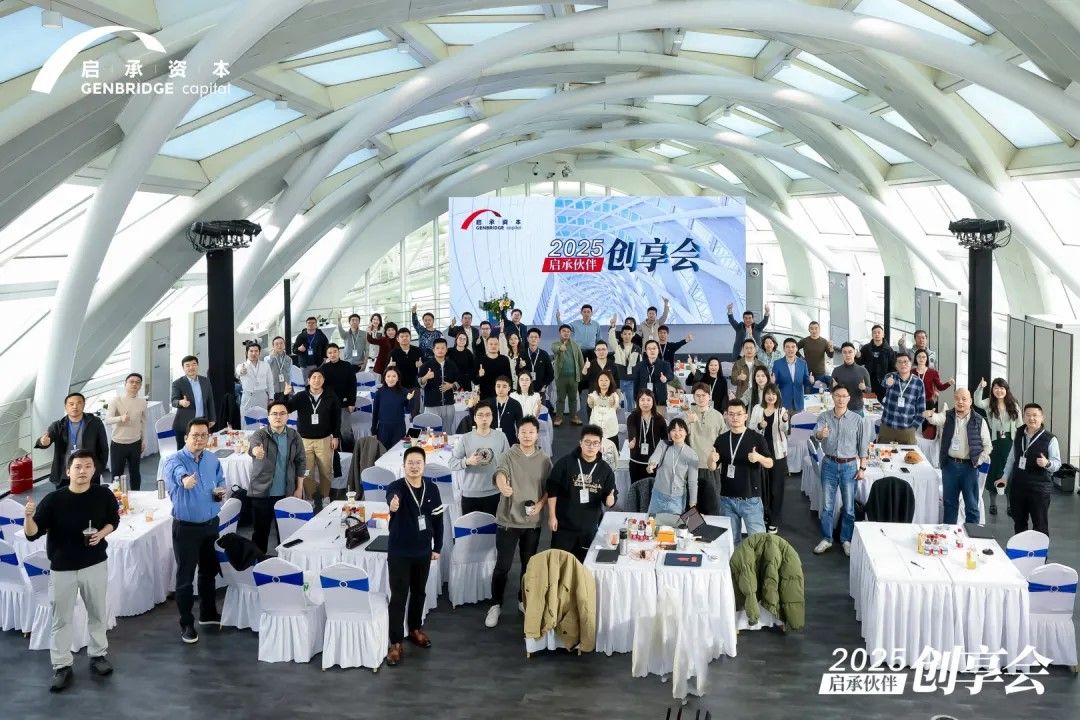
At the end of last month, the 2025 GenBridge Master Class & Annual Portfolios Gathering concluded successfully in Beijing. Nearly a hundred founders, senior executives and industrial experts joined us for this event. Under the overarching theme of “How to find breakthrough growth solutions in a saturation era,” we held five panel discussions and four keynote sessions.
Since our first gathering during the 2023 Shenzhen downpour, through the 2024 Japan study tour and thematic seminars, and now this year — the Annual Portfolio Gathering has progressively expanded beyond the reunion of GenBridge portfolios. On site we gathered not only GenBridge portfolio companies, but also dozens of founders and senior executives from collaborating enterprises, jointly exploring how to break through growth constraints in a saturation market era.
In the opening speech, Robert Chang, Founder of GenBridge, argued that as the market shifts from a seller’s market to a buyer’s market, the new era calls for new solutions. We must adopt a buyer’s perspective, focusing on users and products — achieving breakthroughs in mindset and building corresponding capabilities.
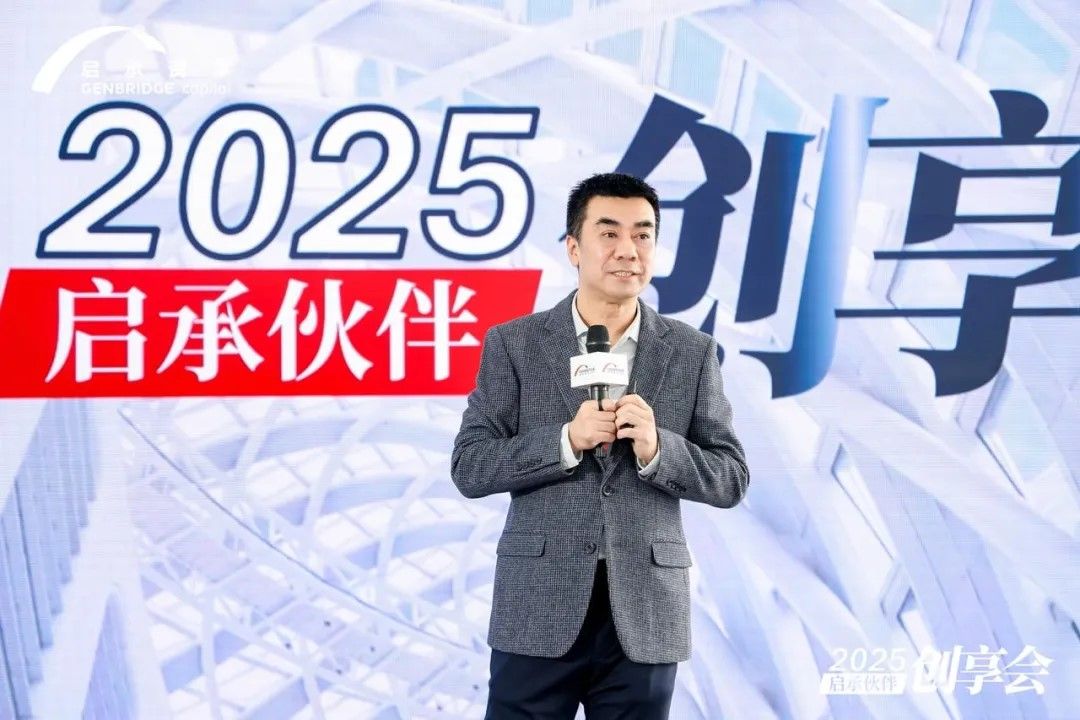
Specifically, the market has fully moved from an incremental-growth era into a saturation one. Competition is no longer a “race,” but rather a “survival game.” Enterprises must shift from seller-driven thinking to buyer-driven thinking, centering on user demand and product innovation to achieve breakthrough growth. Growth models that relied on channel expansion and scale dominance are no longer effective. Only by focusing on user value and product upgrades — while leveraging emerging “buyer-market” channels — can companies stand firm amid fierce competition.
From the industry’s current state: in the first half of this year, nearly half of consumer-sector companies saw revenue decline. Even essential-goods food companies commonly faced downward pressure on income. Traditional retail outlets struggle to sustain, while “buyer-market” channels — represented by players like Sam’s Club, TikTok, Busy Ming Group, etc. — are emerging strongly against the trend, underscoring the importance of a user-value orientation.
Several corporate cases vividly demonstrated the effectiveness of transformation: Weilong co-developed deeply with Sam’s Club to launch blockbuster high-fiber konjac mushroom snacks; Yanker Shop Food fully shifted to bulk-snack wholesale channels and collaborated closely with Busy Ming Group, jointly creating a spicy-sauce tripe SKU with monthly sales of ¥200 million. Pelliot expanded from online basic SKUs to offline flagship stores, achieving dual gains in scale and profitability. Shiyue Daotian successfully opened a new growth trajectory by promoting “90-Day Fresh” rice and using TikTok for scenario-based corn marketing.
At the same time, companies must master a scientific approach to sustain long-term growth. Using the “have-do-be” model, products can be upgraded from mere functional fulfillment to scenario-based solutions and emotional value fulfillment — with Botare range hoods and Shiyue Daotian’s corn as typical examples.
By focusing on blue-ocean segments in the mid-price tier, companies such as Yeswood and Forest Cabin achieved a balance between performance upgrades and cost effectiveness. Meanwhile, New Joy Mart’s “monthly hero product” strategy and Himo’s improvements in user experience demonstrate that through precise user research and collaborative team effort, a one-off breakthrough can be transformed into a long-term capability.
Buyer-perspective solutions of retail and F&B
Focusing on “execution,” this year’s GenBridge Annual Portfolio Gathering was organized into four themed panel discussions:
At the first panel discussion on retail and F&B transformation, Victor Zhang, Founding Partner of GenBridge, focused on strategies for breaking through growth in an industry winter. He invited Minyi Wu (founder of New Joy Mart), Junliang Chen (founder of Dueleton), Lianghong Yuan (founder of Yuanji Dumpling), and Lei Hong (founder of Mr.Ma’s Noodles) to share their experiences around practical implementation of buyer-oriented thinking, business format innovation, and competition response.
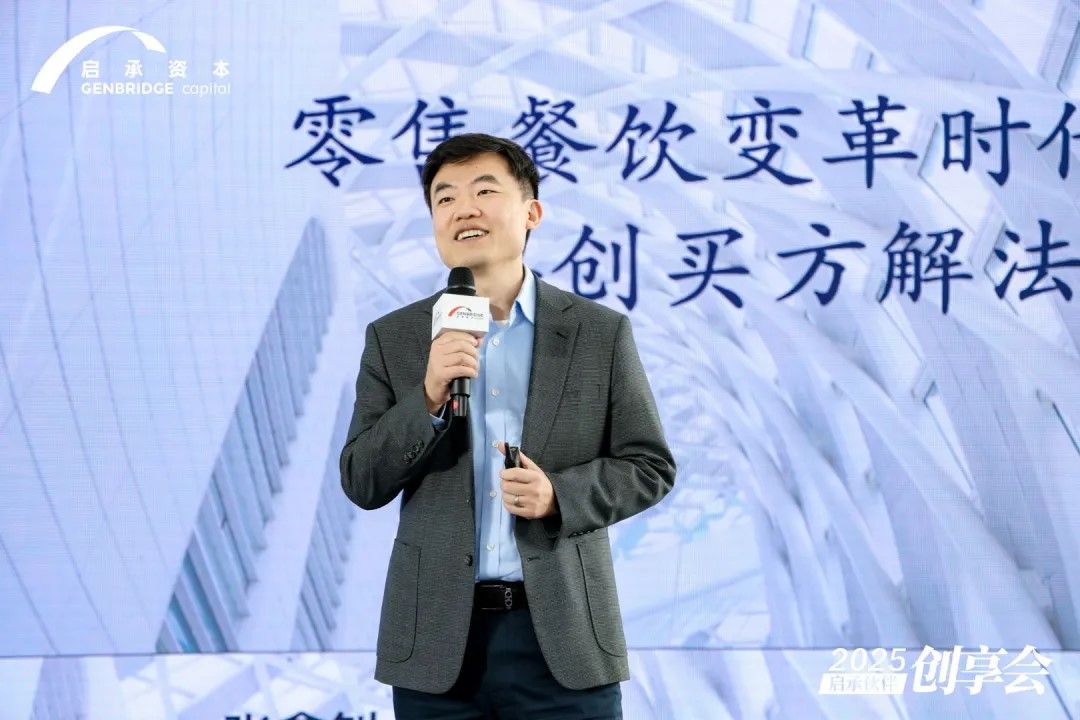
Victor emphasized that in 2025, the retail and F&B industries are seeing intensified polarization: 90% of companies face pressure from declining foot traffic and average spend per customer, while only 10% achieve profitable growth. The core differentiator lies in whether they have shifted from a seller-driven mindset to a buyer-driven mindset.
For example, phenomena such as Freshippo NB validating hard-discount models, the recent trend of regional supermarkets “re-powering” stores, escalating food-delivery wars, and restaurants prioritizing “quality first + enhanced dining experience,” all confirm the trend of consumer-centric transformation.
In summary, putting consumers at the center has blurred the boundaries between demand segments — leading to blurred business-format boundaries. To build a more efficient industry chain, original divisions of labor are being restructured or discarded; and as a result, traffic must be reallocated to find the optimal combination for these changes.
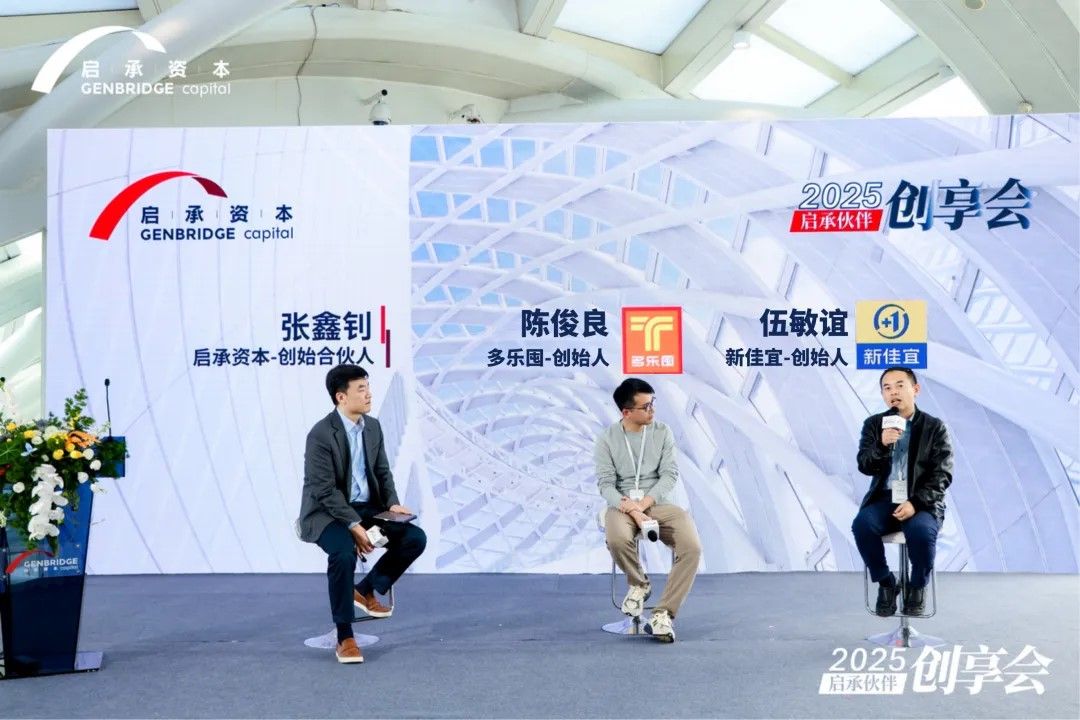
On how to find solutions, the founders among GenBridge portfolios offered fresh insights:
Minyi Wu, founder of New Joy Mart, shared that they abandoned the Japanese convenience-store model and instead reversed engineered their strategy from consumer needs — focusing on the high-quality “fresh food & drink” track. By building their own logistics system and refining products directly with factories, from iced drinks to egg tarts they tackled cost and quality bottlenecks one by one. They insisted on positioning of “better quality at reasonable price,” focused on communities and lower-tier markets, relying on over-engineered SKUs and an efficient supply chain to build a moat.
Junliang Chen, founder of Dueleton, pointed out that the core efficiency of a hard-discount model lies in a simple and focused company culture combined with extreme dedication to each SKU. The company pursues “selling quality goods at the lowest price” as its sole objective, simplifying organizational structure and processes. The entire company focuses on controlling product costs; by working directly with farms and fields to refine essential goods, they do not rely on price wars but aim for sustainable low prices through overall cost reduction.
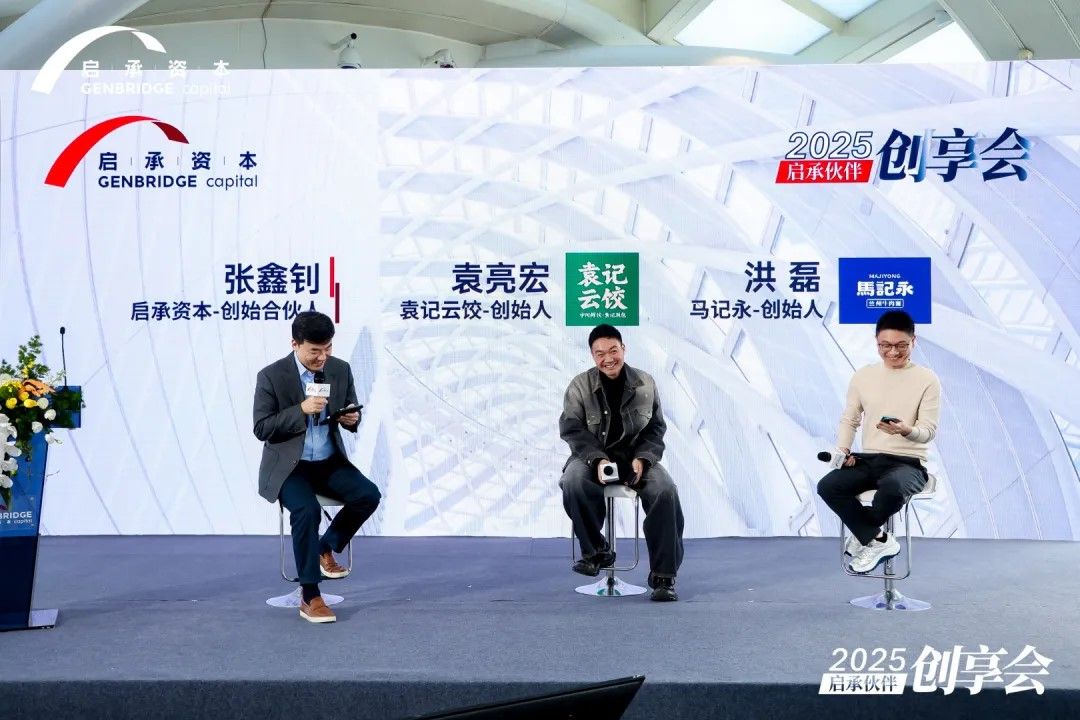
Lianghong Yuan, founder of Yuanji Dumpling, said that the key to scaling a fresh-wrapped dumpling model is supply-chain stability. By building in-house farming and breeding bases, processing factories, and warehousing centers, they ensure full traceability of ingredients. From pork grade to types of vegetables, every detail is strictly selected. With positioning as a “community-level home-style kitchen,” covering dine-in, take-out, and fresh-retail channels, they differentiate themselves through freshness and experience.
Lei Hong, founder of Mr.Ma’s Noodles, noted that the core challenge for scaling freshly made fast food lies in organizational management and long-term time investment. Facing distorted competition in the food delivery price war, they chose to uphold dine-in experience, avoiding the loss of vitality due to organizational inertia. Looking ahead, they plan long-term overseas expansion, aiming to build a global F&B brand — while paying close attention to cultivating team culture and maintaining proactive spirit to adapt to industry changes.
All founders agreed that competition in the industry has transcended traditional business‐format boundaries. The core lies in reconstructing capabilities around consumer demand. Whether through SKU polishing, supply-chain deepening, or organization upgrades, only by focusing on value and maintaining long-term persistence can one break out amid market fragmentation.
Let users lead the way to breakthroughs
In the second segment — the Brand Round-table — George Wan, Partner of GenBridge opened with a core insight: “Let users guide us to breakthroughs.”
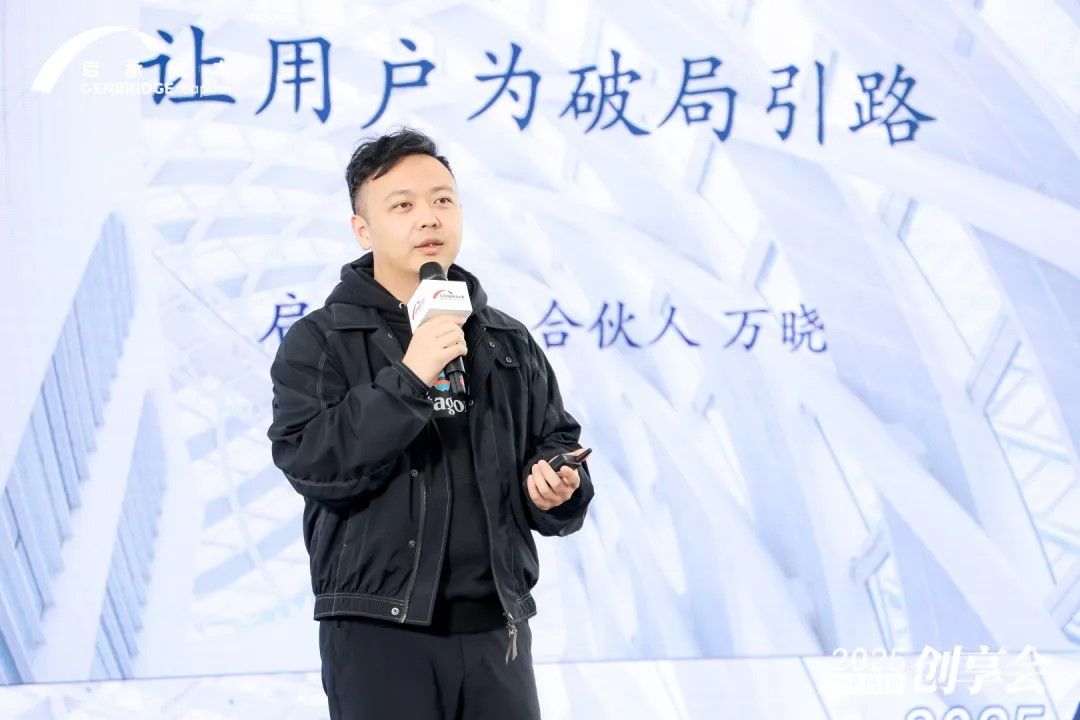
Drawing on cases such as Shiyue Daotian building a “corn universe,” Forest Cabin discovering the “Little Gold Pearl” hit product from user feedback, and Lola Rose integrating Chinese aesthetics to break through to a new price segment, George summarized commonalities behind corporate growth: shifting from supply-driven to user-driven strategies.
George emphasized that starting from users, we need sharper user insights, better content, more refined products, and broader channel coverage. The efficiency of the entire growth flywheel depends on organizational efficiency. Yet the force driving the flywheel has shifted: it used to be channels, but now it is users.
During the round-table discussion on “creating user value,” founders from Forest Cabin, Lola Rose, and Ludao shared their core thinking based on brand practice — covering product iteration, business format innovation, channel layout, and value enhancement.
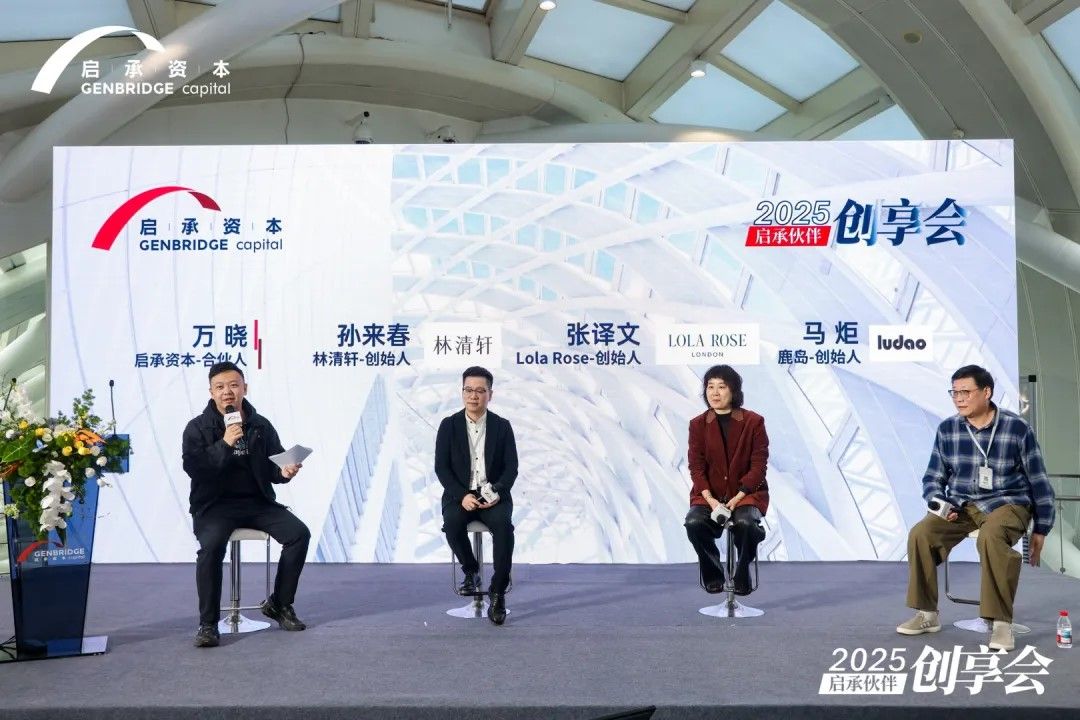
Laichun Sun, founder of Forest Cabin, focused on a high-end large-SKU strategy centered on camellia-flower essence oil — continuously iterating the product. Through technological innovation, he solved the pain point of “oiliness” common in oil-based skincare products; simultaneously, through professional team operations, he incubated the new hit SKU “Little Gold Pearl.” By building an in-house supply chain built to pharmaceutical standards, he laid a robust foundation for the brand’s premium positioning.
Yiwen Zhang, founder of Lola Rose, recalled how the unexpected hit of the Little Green Watch propelled the brand’s takeoff. However, the success confined Lola Rose to primarily being an online gifting brand. Over the past two years, Lola Rose gradually expanded into the offline core female user market. Relying on in-store storytelling and design innovation, the brand consecutively launched popular necklaces, bracelets, and other jewelry, achieving breakthroughs in price segments and user scenarios.
Ju Ma, founder of Ludao, adhered to the “good and affordable” philosophy, dedicated to creating consumption scenarios where “customers are willing to linger.” By deepening supply-chain control and building reputation through word-of-mouth, the brand developed hit products, pushing the format from apparel into multi-category retail. The experience of opening their first store in Shanghai further inspired the brand to rapidly present a comprehensive brand image, breaking free from a single cost-performance label.
In the founders’ sharing, “user” emerged as the keyword throughout. Professional team capability and systematic execution are critical for innovation. Online and offline channels must be precisely positioned and coordinated; supply-chain deepening and user-value excavation remain the core support for a brand’s long-term growth.
Besides the founders’ sharing, we also invited external guest Doris, founder of Digipont to give a presentation.

From a psychological-first perspective, Doris suggested that brands should shift from managing product categories to managing consumer communities. She pointed out that many companies struggle with difficulty replicating second-growth curves and ineffective brand marketing because they have failed to capture community consensus.
Using the Be-Do-Have model, Doris emphasized that products must evolve from functional satisfaction (Have), to situational experience (Do), to emotional value and identity recognition (Be). Through cases like Lululemon’s early focus on the “super-girl” demographic to build consensus, or sit-stand desk brands segmenting users by tasks, she illustrated that the key to community strategy is identifying high-potential user groups, operating on multiple layers, and linking products, content, and organization with a unified value consensus — enabling brands to resonate emotionally with users rather than relying solely on scale or functional competition.
Value of deep, long-term partnership
In the latter part of Annual Portfolio Gathering, GenBridge's head of value creation, Bruce Yang, shared four portfolio case studies from the past year. These highlighted our warm yet effective value creation support practices — demonstrating deep, long-term accompaniment beyond investment.
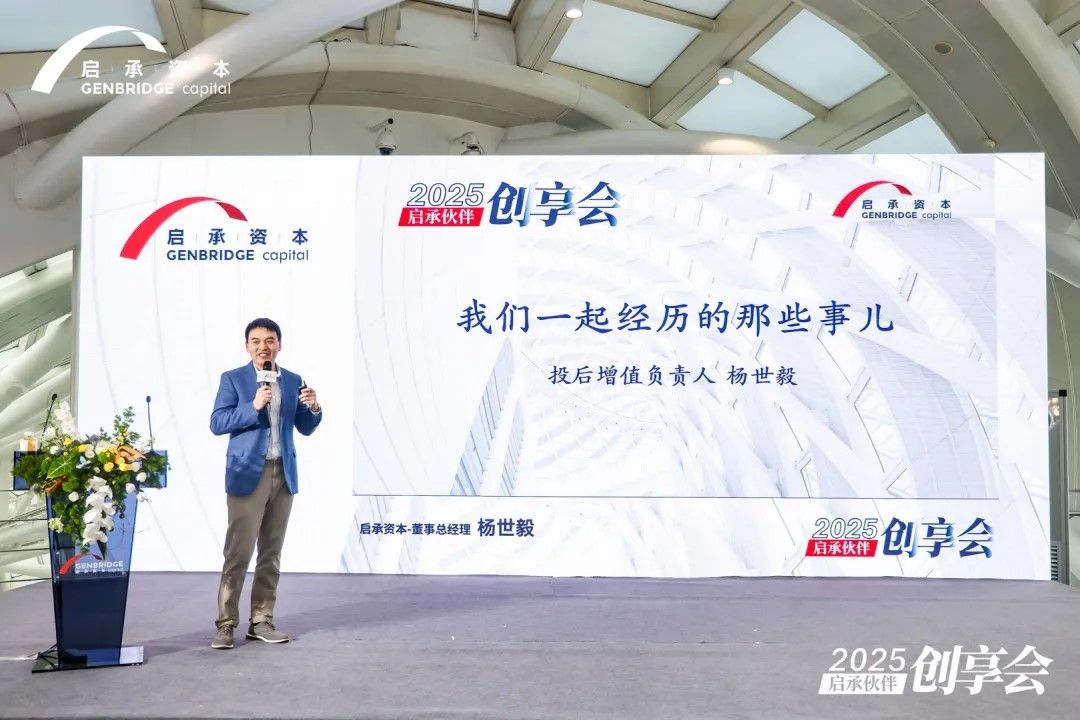
For example, facing a downturn in consumer demand, our value creation team organized an innovative “post-mortem session” for distressed companies — helping the Himo team deeply analyze core issues, refocus the strategy on “survival,” and define three sure-win battles: cost reduction, channel breakthrough, and product overhaul. This led to Himo’s dramatic turnaround — a rite of passage under adversity. Similarly, through strategic co-creation with Forest Cabin, we concentrated their second “sure-win battle” on a TikTok hit SKU “Little Gold Pearl,” achieving results that exceeded expectations and exemplifying the value of collaborative creation.
Since 2023, our value creation team has provided continuous full-cycle support to New Joy Mart: defining their own-brand sure-win strategy, follow-up decoding sessions, review meetings, and five-year strategic planning — helping New Joy Mart expand its store network from Hunan to Hubei and achieve breakthrough growth driven by its own brand. As one of GenBridge’s earliest investments, we have also worked with Qiandama over many years. Recently, through the “Hero-Product Battle” strategic meeting for its own brand, our value creation team participated fully — from preliminary research, competitive analysis to strategic decoding and execution — continuing our philosophy of “standing by our portfolios in both calm and storm.”
As core users and community leaders of GenBridge’s value creation team, Minyi Wu, founder of New Joy Mart, and Bill Wang, CFO of Qiandama also joined the panel discussion, sharing the challenges they faced during business transformation and how, through co-creation with the GenBridge team, they discovered new solutions.
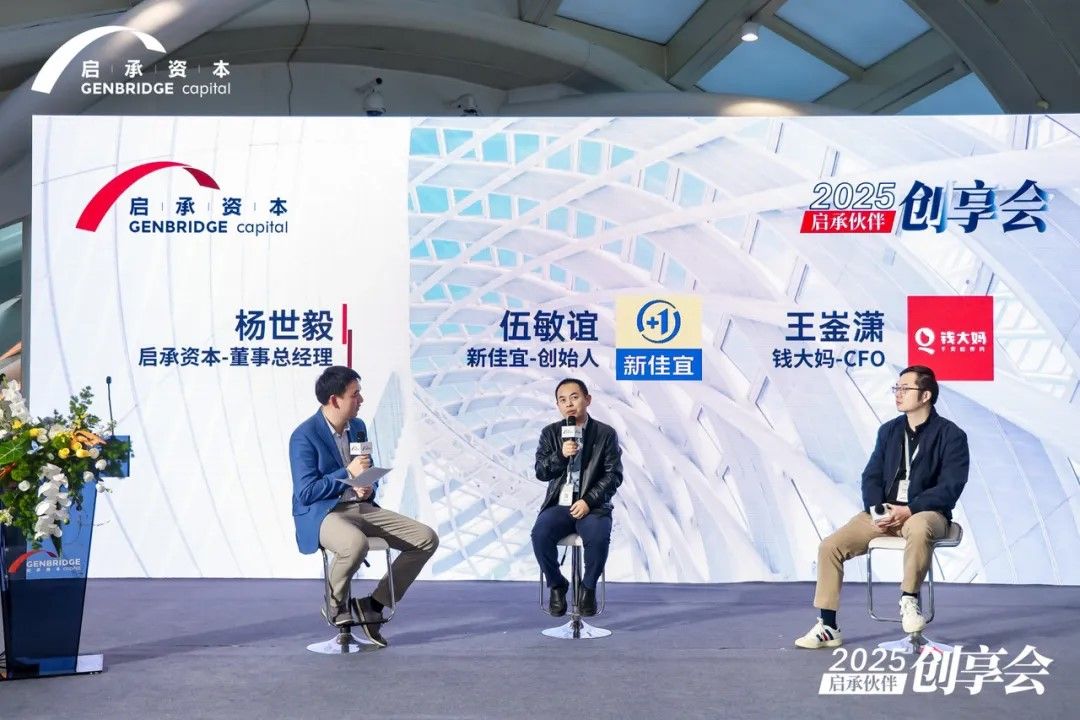
Specifically, the core value of GenBridge’s value creation team lies not in providing individual support, but in delivering systematic solutions.
For example, during New Joy Mart’s critical transformation period, GenBridge facilitated the introduction of key senior executives through its network, helping the company break free from the pitfalls of its previous weak-franchise model, define a new direction, and complete a full transformation including “closing down thousands of stores and restarting.” Meanwhile, by using “help each franchisee earn an additional several thousand yuan per month” as a North Star metric, we drove strategic focus and achieved significant per-store profit improvements.
For Qiandama’s need for sustained growth breakthroughs, GenBridge’s value creation team organized a tailored two-and-a-half-day strategic meeting. Through industry-trend analysis and benchmarking of leading cases, they helped the team clearly identify opportunities to improve supply-chain efficiency and accelerate the growth flywheel. With the founders leading the sure-win battles, the team’s morale was revitalized.
The value of deep-end accompaniment goes beyond business performance and development; it also touches the personal growth and life experience of founders.
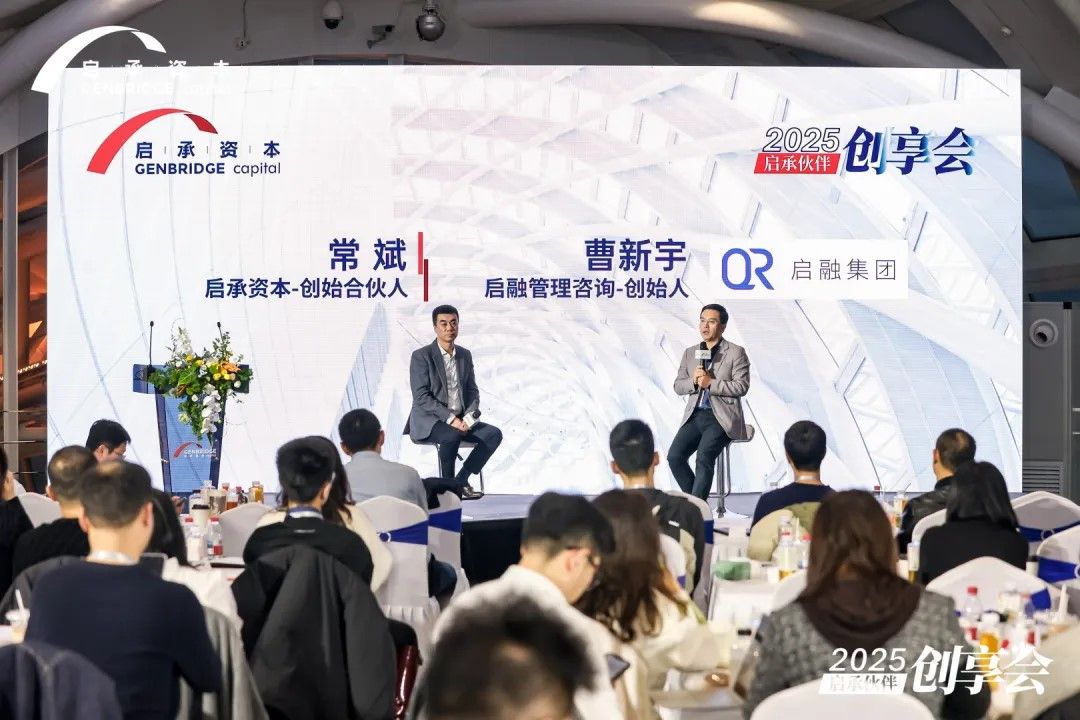
At the closing, Robert Chang, founder of GenBridge invited Leo Cao, founder of Qirong Management Consulting — to lead participants in a light “stretching” session. In a relaxed atmosphere, they engaged in a dialogue about “organizational subjectivity,” presenting views such as: founders should manage their energy judiciously, and organizations should build subject-level autonomy and ownership.
Leo proposed that founders and organizations’ growth must go through four stages: awakening awareness and finding a higher motive beyond “making money or proving oneself”; overcoming fear and daring to shrink strategically — dancing with uncertainty; allowing room for mistakes for oneself and the team, treating peers and portfolios with an ecosystem mindset; and continuously evolving, viewing every task as a journey of cultivation, to synchronize business growth with personal life growth.
At 2025 Annual Portfolio Gathering, we witnessed each other’s growth in the spirit of reunion. It has become an important annual ritual for GenBridge and our portfolios. Through mutual inspiration and exchange, we gained new insights and created many precious moments together.
We believe that despite continual changes in the market environment, the fundamentals of China’s consumption remain resilient and full of opportunity. GenBridge will remain steadfast in supporting visionary and resilient entrepreneurs, exploring long-term value together — finding breakthroughs amid challenges, and advancing steadily with trends.